On this page
- How We Evaluated These Winnipeg Job Search Approaches
- Target Winnipeg’s Core Production and Supply Chains
- Pitch Decision-Makers at Mid-Sized Employers Directly
- Use Regional Talent Portals Like Work in Manitoba
- Engage Settlement and Career Engines Such as Manitoba Start
- Connect with Industry-Specific Sector Councils
- Build Genuine Local Relationships: The Two-Degree Principle
- Frame Your Experience for Long-Term Retention
- Understand Compensation Realities and the Cost-of-Living Offset
If you treat Winnipeg like Toronto or Vancouver, your job search is going to stall fast.
We see candidates make the same mistake every month. They open up a national job board, blast out fifty generic resumes to every corporate posting between Portage and Main, and wonder why their inbox stays completely silent. They assume Manitoba’s capital operates under the same hyper-automated, faceless recruiter model that governs larger metropolitan hubs. It does not.
Winnipeg runs on tight personal networks, durable industrial pillars, and a massive base of mid-sized private employers who value reliability and staying power over glossy credentials. The city does not experience the wild economic swings of oil-dependent Calgary or the speculative tech booms of Toronto. It grinds along steadily. That steady pace means employers are cautious, practical, and heavily protective of their internal culture. If you want to find a job in Winnipeg, you have to adjust your tactics to fit the real rhythm of this city.
The good news is that when you understand how Manitoba employers actually hire, the process becomes far less frustrating. The market is accessible, decision-makers are reachable, and the cost-of-living math often leaves professionals further ahead financially than they would be in high-rent coastal centres. You just need to know which sectors are holding up, where the hiring managers spend their time, and how to position yourself so you do not look like someone who will pack up and leave the moment winter arrives.
How We Evaluated These Winnipeg Job Search Approaches
Not every job search tactic carries equal weight in Manitoba. When we put together this guide, we evaluated approaches using four strict criteria designed to filter out generic advice and focus on what actually moves the needle in this specific market.
First, we looked at mid-market accessibility. Winnipeg’s economy is not driven by fifty Fortune 500 headquarters. It is driven by hundreds of mid-sized firms employing between 50 and 500 people. If a search approach relies entirely on enterprise applicant tracking systems and multi-stage corporate campus recruiters, it fails our test. The best methods must give you a direct route to plant managers, controllers, directors of operations, and business owners.
Second, we evaluated sector alignment. Job hunting strategies must match the realities of Manitoba’s economic base. We prioritized methods that feed directly into the province’s most resilient production and distribution sectors, advanced manufacturing, aerospace, agribusiness, and heavy transportation, rather than niche segments that hire only once in a blue moon.
Third, we measured regional infrastructure utility. Manitoba funds an unusually dense network of provincial and civic employment organizations, such as Manitoba Start and specialized sector councils. If an approach ignores these subsidized, employer-connected local pipelines, you are leaving massive competitive advantages on the table.
Finally, we evaluated local network density. Winnipeg functions like a large town of 800,000 people. People know each other across industries. A good strategy has to build credible social proof and genuine local rapport, because a direct referral from a respected peer carries ten times more weight here than an optimized LinkedIn badge.
Target Winnipeg’s Core Production and Supply Chains
The fastest way to burn out in a job search is targeting industries that are shedding headcount or exist only as satellite sales offices. Winnipeg’s core strength lies in making things, moving things, and feeding people.
Advanced manufacturing forms the backbone of the local private economy. The city is home to massive heavy-vehicle manufacturers like New Flyer Industries and Motor Coach Industries, along with major agricultural equipment builders like MacDon Industries and Buhler Versatile. These are not small assembly shops. They are multi-facility operations that require a constant stream of production planners, design engineers, quality assurance managers, continuous improvement specialists, and skilled trades. If you have an industrial, technical, or operations background, these plants offer stable, multi-decade career tracks.
Aerospace is another regional heavyweight that outside job seekers frequently overlook. Winnipeg represents the third-largest aerospace hub in Canada. Companies like Boeing Canada Winnipeg, StandardAero, Magellan Aerospace, and Cormer Aerospace handle everything from composite aerostructures to military engine maintenance, repair, and overhaul. Even during broader economic pullbacks, long-term commercial airline service contracts and defence commitments keep hiring steady across engineering, procurement, safety compliance, and technician roles.
Then you have agribusiness and food processing. Winnipeg serves as the commercial command centre for Western Canadian agriculture. Corporate headquarters and massive grain processing facilities sit right within city limits. Global giants like Richardson International, Cargill, Paterson GlobalFoods, and Roquette operate extensive corporate, trading, agronomy, and research teams across the metro area. These companies need financial analysts, logistics coordinators, software developers, and commodity handlers who understand the practical realities of moving agricultural goods worldwide.
Tech Talent Canada hits the nail on the head here, but there is a crucial nuance that many job seekers miss. Because tech in Winnipeg is woven directly into these legacy sectors rather than existing in a separate startup silo, you should rarely search for pure software companies alone. A software developer, systems architect, or project manager will often find their best-paying and most secure roles inside a commercial transportation firm, an insurance giant like Great-West Life (Canada Life) or Wawanesa, or a digital supply chain operation at CentrePort Canada.
To make sense of where these industries are heading over the next few quarters, review official Canadian labour market data. Checking regional industry projections helps you verify which sub-sectors are expanding before you spend weeks tailoring your portfolio.
Pitch Decision-Makers at Mid-Sized Employers Directly
Winnipeg’s corporate landscape is dominated by privately held, family-founded, or mid-market operations. Think of firms in industrial parks like St. Boniface Industrial Park, Murray Industrial Park, or Inkster Industrial Park. These businesses do not have sixty-person human resources departments. In many cases, the HR department is one overworked manager or an executive assistant who handles payroll and benefits alongside hiring.
That structural reality gives you a massive advantage if you know how to circumvent standard application portals. When an opening appears at a 150-person precision machining company or a regional trucking fleet like Bison Transport or Payne Transportation, the person feeling the acute pain of that vacancy is the Director of Operations or the Terminal Manager, not an automated screening algorithm.
Here is the approach that works:
- Identify the company and look up the operational lead on LinkedIn. For an operations role, find the VP of Operations or Director of Logistics. For an accounting role, find the Controller or VP of Finance.
- Skip the lengthy cover letter. Send a concise, polite direct note or email explaining exactly what problems you solve, why you want to work specifically in Winnipeg, and how your past work matches their operational challenges.
- Keep it brief. Three short paragraphs maximum. Mention specific knowledge of their product lines, distribution hubs, or facility expansion.
- Follow up once after seven business days.
Mid-market leaders in Winnipeg appreciate candour, directness, and people who do not waste their time. If your background is a fit and they happen to have an unposted need, they will pick up the phone. Even if they do not have an open requisition that week, they will frequently forward your email to their GM with a note that says: “Keep this person on file, we might need them next month.” That never happens when your resume disappears into a faceless global applicant tracking system.
Before reaching out, ensure your documents present your experience cleanly. You can always get a professional resume assessment to ensure your key operational metrics stand out on the page without generic fluff.
Use Regional Talent Portals Like Work in Manitoba
Most job seekers default to Indeed and LinkedIn. While those platforms carry plenty of volume, they also attract hundreds of remote applicants from around the world who have no intention or ability to relocate to Manitoba. Local hiring managers get inundated with hundreds of mismatched resumes, causing them to disengage from those platforms entirely.
To find employers who are actively searching for talent that actually resides in (or is legally eligible to work in) Manitoba, you must use provincial-specific infrastructure. The primary platform to focus on is Work in Manitoba.
Developed in partnership between Economic Development Winnipeg, YES! Winnipeg, and the Manitoba government, the Work in Manitoba portal is built specifically to address regional labour bottlenecks. It uses skills-based matching algorithms powered by Magnet, connecting employers directly with local and provincial candidates. Employers like Manitoba Hydro, SkipTheDishes, Pollard Banknote, and Wellington-Altus actively recruit through this platform because it filters out the international bot spam that plagues global job sites.
The advantage here is speed. Because employers pay little to nothing to list roles on provincial portals, smaller and mid-sized businesses that refuse to pay hundreds of dollars per post on commercial job boards list their openings here first. When you create a complete profile on Work in Manitoba, your skills are indexed against local employer requirements automatically. If you match an active search criteria, you get notified directly, often before the position ever hits a general public board.
Do not treat regional portals as an afterthought. Fill out every skill category, upload a clean PDF version of your resume, and keep your availability date current. For regional employers looking to hire locally without paying third-party agency markups, this portal is their first port of call.
Engage Settlement and Career Engines Such as Manitoba Start
If you are a newcomer to Canada or recently moved to Manitoba from abroad, trying to crack the Winnipeg market without tapping local settlement infrastructure is a major tactical error. Manitoba has one of the most sophisticated, government-backed integration setups in the country, centered around Manitoba Start.
Located on Portage Avenue in downtown Winnipeg, Manitoba Start serves as the central intake and referral hub for internationally educated professionals, permanent residents, and provincial nominees. Unlike generic employment centres that hand you a pamphlet and point you toward a computer lab, Manitoba Start provides direct employer connections through its Job Matching Unit.
The organization partners directly with hundreds of Winnipeg employers across finance, advanced manufacturing, healthcare, and IT. These companies approach Manitoba Start specifically when they have hiring needs, hosting exclusive hiring cafes, meet-and-greet sessions, and recruitment webinars. If you are registered as a client, you can be referred directly to hiring managers without ever competing on open public job boards.
Beyond recruitment, they provide critical support for qualifications recognition. If you are an engineer, nurse, accountant, or tradesperson licensed outside Canada, sorting out credential equivalencies through provincial regulatory bodies, like Engineers Geoscientists Manitoba or the College of Registered Nurses of Manitoba, can feel like an administrative maze. Manitoba Start connects you to specialized funding programs, such as SEED Winnipeg’s Recognition Counts program, which offers low-interest microloans to cover licensing exams, study materials, and certification courses.
The Winnipeg Chamber of Commerce highlights an essential truth about this market. Even as the broader national labour market cools, Manitoba employers still report persistent shortages in specialized operational and technical roles. The disconnect is not a lack of available work. It is a mismatch between how employers recruit and where job seekers look. By registering with organizations like Manitoba Start or the Osborne Village Resource Centre, you position yourself inside the vetted pipelines that employers trust when general recruitment channels fail.
Connect with Industry-Specific Sector Councils
One of Manitoba’s best-kept secrets in workforce development is its network of provincial sector councils. These organizations are funded by the Manitoba government and governed by private industry leaders to solve workforce shortages within specific trades and industries.
If you are looking for work, you should not wait for job postings to pop up on LinkedIn. You should be looking directly at what these sector councils are doing. They host specialized training programs, industry expos, and closed job boards that give you direct access to member companies.
Key sector councils operating in Winnipeg include:
- Canadian Manufacturers & Exporters (CME) Manitoba: CME represents the largest industrial employers in the province. Their local office regularly facilitates workforce training, health and safety certifications, and specialized events connecting production and manufacturing professionals directly to plant managers and HR leaders.
- Manitoba Construction Sector Council (MCSC): A vital resource for both skilled trades and construction management professionals. MCSC tracks upcoming infrastructure builds across the province and offers pathways for safety training, trade apprenticeships, and engineering placement.
- Tech Manitoba: As the central industry association for Manitoba’s technology ecosystem, Tech Manitoba connects digital professionals across software, cyber defence, and enterprise architecture. They run regular mentorship cohorts, industry summits, and networking events where local CTOs and engineering directors actively look for talent.
- Bioscience Association Manitoba (BAM): Winnipeg boasts a thriving life sciences and pharmaceutical manufacturing cluster, led by companies like Emergent BioSolutions and Bausch Health. BAM serves as the hub for this community, offering regulatory compliance workshops, specialized biotech career fairs, and networking sessions.
- Manitoba Trucking Association (MTA): Transportation and distribution are central to Winnipeg’s geography. The MTA represents hundreds of carrier companies, logistics providers, and fleet maintenance shops, serving as a primary connector for fleet supervisors, dispatchers, and supply chain analysts.
Connecting with these councils does not require an executive title. Most of them welcome students, newcomers, and career changers at their public events. Attending an industry breakfast or safety symposium hosted by CME or Tech Manitoba instantly places you in the same room as the managers who are making hiring decisions for the next quarter.
Build Genuine Local Relationships: The Two-Degree Principle
You will hear this from every seasoned professional in Manitoba: Winnipeg is a two-degree-of-separation town.
In a city of 800,000 people, everyone is connected. If you work in commercial real estate, you know everyone who works in commercial real estate. If you are in supply chain management, your former colleague probably works at the carrier across the perimeter highway.
What does this mean for your job search? It means cold, transaction-heavy networking will backfire. Winnipeg professionals are friendly, approachable, and generally generous with their time, but they have a very low tolerance for opportunism. If you send an aggressive LinkedIn message demanding an interview referral before you have even introduced yourself, you will get ignored. Worse, people talk. A reputation for pushiness can follow you around a tight market.
Instead, focus on low-pressure, informational coffee chats. Reach out to mid-level professionals whose career path you admire. Tell them you recently moved to the city or are transitioning into the field, and ask for twenty minutes to understand how their sector operates locally.
When you sit down with someone at a local coffee shop in the Exchange District or Corydon, do not ask them for a job. Ask them about the market:
- Which local companies are expanding their operations?
- What industry associations are actually worth joining?
- Who else in the local community should you speak with to better understand this space?
More often than not, if you come across as humble, capable, and committed to building a life in Manitoba, that contact will introduce you to two other people. That is how the hidden job market in Winnipeg opens up. Open requisitions are frequently filled by word of mouth before an HR rep ever gets permission to post the listing publicly.
Local community events also provide natural touchpoints. Attend Winnipeg Chamber of Commerce monthly luncheons, join a committee with the Downtown Winnipeg BIZ or The Exchange District BIZ, or volunteer with local non-profits like the United Way Winnipeg. Active community involvement is taken seriously by Manitoba executives. Showing up consistently signals that you are investing in the community, not just using the city as a temporary stepping stone.
Frame Your Experience for Long-Term Retention
Employers in Winnipeg have an understandable paranoia: they worry about hiring talented people who will leave for Toronto, Montreal, or Vancouver after twelve months. The city’s relatively harsh winter climate and mid-sized market size mean local companies spend a lot of time and money replacing transient staff.
If your resume looks like that of an out-of-province transient, you will be passed over for a local candidate with slightly less experience every single time. You have to actively counter this bias in your application materials.
First, clarify your geographical roots immediately. If you live in Winnipeg, make your local address or neighbourhood explicitly clear at the top of your resume. If you are relocating from another province, address it directly in your introductory note. Give a clear, personal reason why Winnipeg is your destination: family connections, buying a first home, enjoying the pace of life, or long-term community ties. When hiring managers see that you have a permanent plan to stay, their perceived risk drops to zero.
Second, highlight practical problem-solving over corporate jargon. Prairie business culture tends to be pragmatic, cost-conscious, and focused on tangible execution. Instead of listing high-level strategic buzzwords, show the exact results of your work. Did you cut warehouse turnaround times by fourteen percent? Did you manage a team that kept production running through severe weather disruptions? Did you audit inventory records across three separate facilities? Concrete metrics demonstrate that you can step onto the floor or into the office on Monday and get things done without hand-holding.
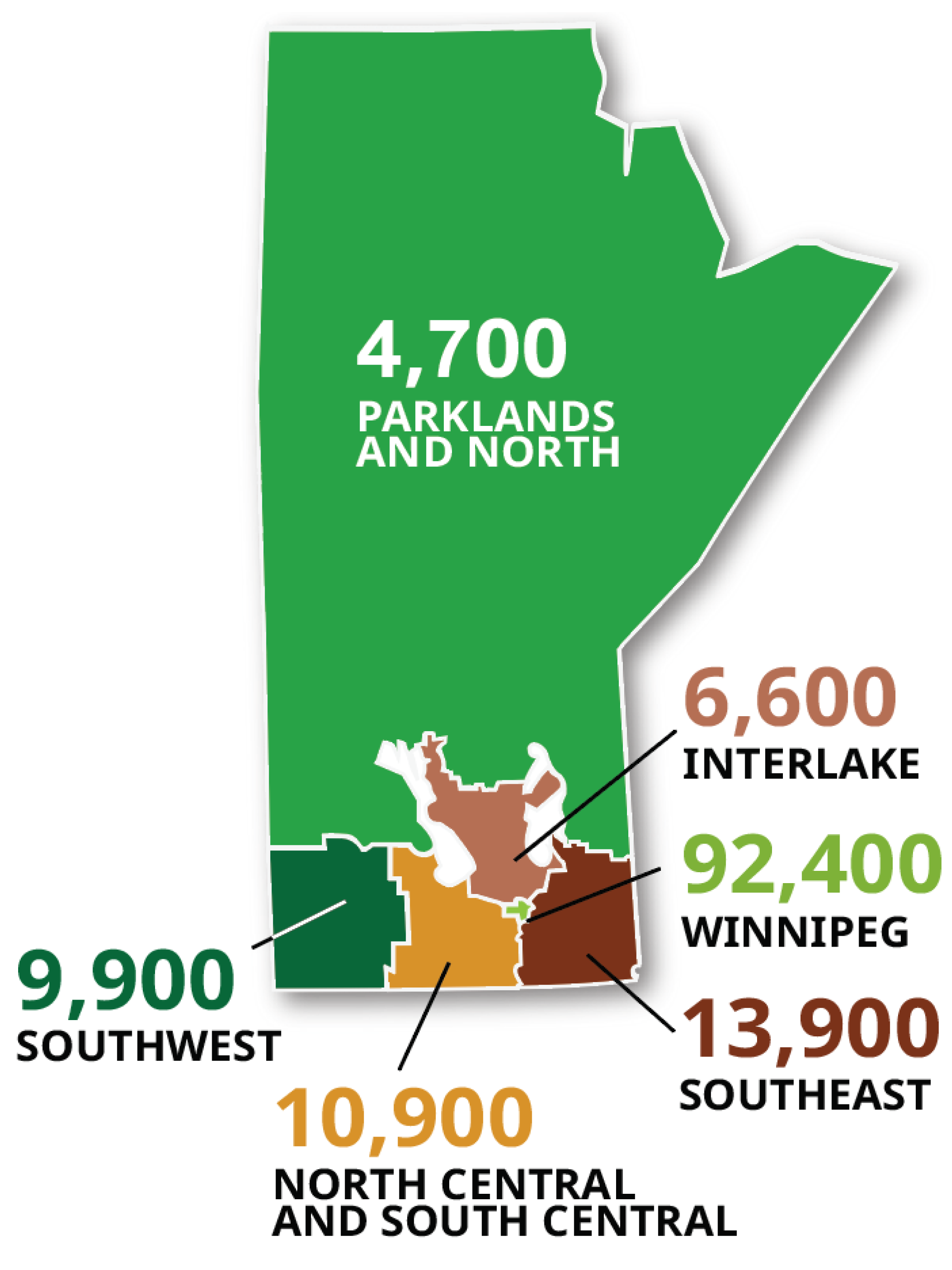
Last year, the provincial government released its 2025-2029 Manitoba Labour Market report. The report, which was compiled using data gathered in 2024, projects the province will have 138,000 job openings between 2025 and 2029. It attributes 42 per cent of those openings to economic growth and the remaining 58 per cent to replacing retiring workers.
Source: [Winnipeg Free Press, Education Fall 2026](https://www.winnipegfreepress.com/fp-features)
This projection from the Manitoba Labour Market report reveals why retention is so critical to local employers. With nearly sixty percent of openings driven by retiring baby boomers, companies are desperate for reliable mid-career professionals who can step into operational vacancies and stay for five to ten years. If you demonstrate technical competence alongside genuine local stability, you become the exact candidate these employers are searching for.
When you secure an interview, reinforce this mindset. Prepare thoroughly by reviewing the best questions to ask an interviewer in Canada. Asking sharp questions about plant safety, supply chain continuity, and team longevity shows the hiring team that you think like a permanent stakeholder.
Understand Compensation Realities and the Cost-of-Living Offset
Salary discussions in Winnipeg can catch candidates from larger markets off guard. A mid-level financial analyst or senior software engineer making six figures in Toronto might find that comparable openings in Winnipeg offer fifteen to twenty-five percent less on base salary.
Before you dismiss an offer, do the real math. According to Statistics Canada, housing prices and living costs in Manitoba remain significantly lower than in British Columbia or Ontario. A salary of $85,000 in Winnipeg frequently provides higher disposable income, shorter commutes, and an earlier path to homeownership than $115,000 in the Greater Toronto Area or Metro Vancouver.
Furthermore, total compensation packages at established Winnipeg employers often feature benefits that larger multinational firms have phased out:
- Strong defined-benefit or defined-contribution pension plans, particularly in public utilities (Manitoba Hydro), healthcare (Shared Health), insurance, and post-secondary institutions (University of Manitoba, Red River College Polytech).
- Generous annual leave allowances and flexible hybrid schedules. Manitoba’s provincial leadership has resisted sweeping full-time return-to-office mandates, allowing local corporate and public sector employers to maintain reasonable work-life balance standards.
- Annual profit-sharing or performance bonuses tied directly to operational plant targets.
When evaluating a job offer, look at the whole picture. Check the Job Bank trend analysis tool to benchmark median provincial wages for your specific NOC (National Occupational Classification) code before entering negotiations.
When you are ready to discuss terms, remember that pushing hard on base salary without regional market data can backfire. Learn how to negotiate a job offer in Canada constructively. Focus on vacation time, professional development budgets, licensing fee coverage, or a six-month performance review instead of issuing aggressive salary ultimatums.
Finding work in Winnipeg is not about playing a numbers game. It is about understanding the practical needs of mid-sized employers, targeting stable production supply chains, and showing up as a committed professional who values long-term stability. Once you align your search with how Manitoba operates, the opportunities are there for the taking.
More From the Blog
Canada-EU Accord: Youth Mobility for Canadian Workers Explained
Learn how expanded youth mobility for Canadian workers creates new European job options, working holidays, and resume-ready transatlantic...
Read the articleHow to Get a Human Resources Job in Canada: A Step-by-Step Tutorial
Want to land a human resources job in Canada? Follow our step-by-step guide to CPHR pathways, provincial labour laws, resumes, and...
Read the articleTeam Canada Strong: How to Access Skilled Trades Training in Canada
Learn how to access funded skilled trades training in Canada under Team Canada Strong, find sponsor employers, and land a registered...
Read the articleReady to Launch Your Career Marketing Campaign?
Book a strategy call and see how Nainly can transform your job search.
Schedule a CallFree consultation. No commitment.