On this page
- What you need before starting your military resume
- Step 1: Choose the civilian job before translating your experience
- Step 2: Turn service records into an evidence bank
- Step 3: Use MNET to find civilian occupations worth investigating
- Step 4: Replace military shorthand with work an employer can picture
- Step 5: Quantify leadership and operational scope without inventing results
- Step 6: Check civilian credentials separately from transferable experience
- Step 7: Build a civilian resume around relevant evidence
- Step 8: Tailor the resume to a real posting, not an imaginary employer
- Step 9: Use Canadian transition support to check your assumptions
- Step 10: Test whether your military-to-civilian translation worked
- In brief
- Key takeaways
- Frequently asked questions
Your civilian resume needs to show an employer how your military experience can help them run a department, maintain equipment, support customers, or deliver work safely. Your military record already tells the Canadian Armed Forces what you’ve done; explaining that work to a civilian reader takes different language.
Canada’s Veterans’ Week runs from November 5 to 11, 2026, according to Veterans Affairs Canada’s commemoration page. It’s a useful time to give a practical part of supporting veterans some attention: helping people outside the military understand the experience gained there. (veterans.gc.ca)
Keep your service visible and make it easy to understand. Along with spelling out acronyms, you’ll need to choose a civilian target and gather relevant evidence. Explain your contribution, then separate the skills you can transfer from credentials that need formal recognition. That’s where the careful work comes in.
The steps below take you from service records to a targeted civilian resume, paying particular attention to the Canadian MOSID-to-NOC tool, trade recognition, and federal transition support.
What you need before starting your military resume
Get your material together before you open a resume template. Adjusting margins can keep you busy for a while, but it leaves the difficult questions unanswered.
Start with:
- Your service history, Member’s Personnel Record Resume if available, course certificates, and any performance feedback you’re authorized to consult.
- Civilian job postings you’re genuinely interested in, with their duties, qualifications, location, and working conditions.
- A private working document where you can collect accomplishments, supporting evidence, civilian terminology, and unresolved credential questions.
Stick to information you’re authorized to retain and discuss. Keep protected records out of personal accounts, and don’t upload operational documents to an external writing tool. Unsure what you can use? Check through the appropriate military channel before transferring anything.
Give the working document its own space, separate from your resume. It can be long and messy; your resume needs to be selective.
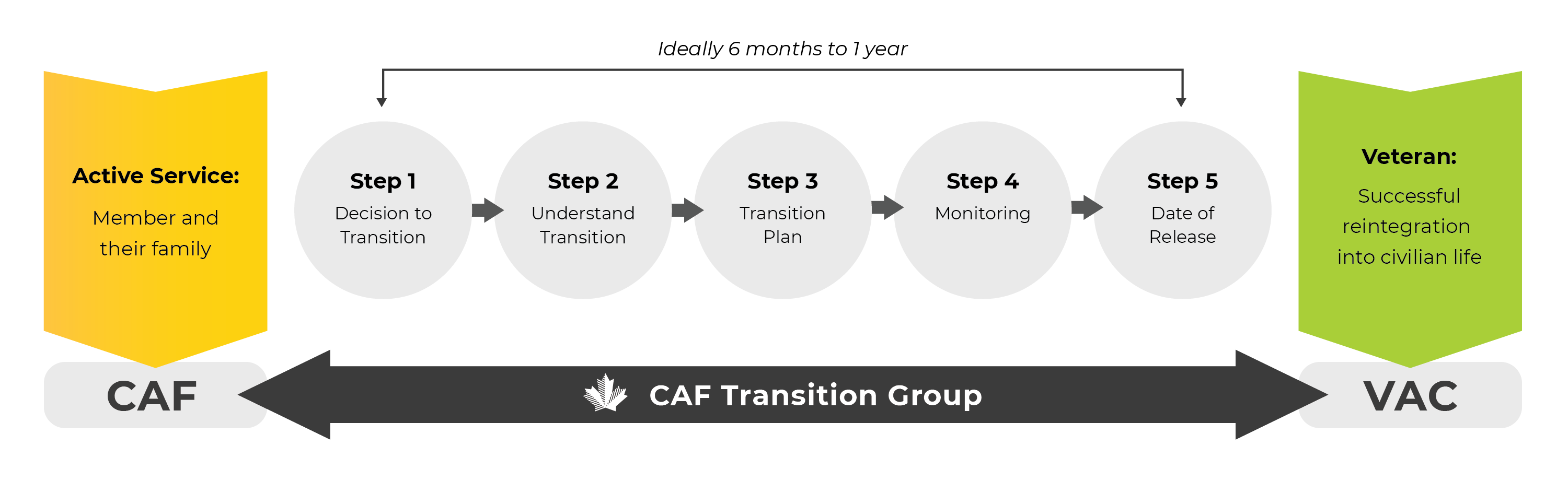
Step 1: Choose the civilian job before translating your experience
“Applying for maintenance coordinator positions near Edmonton” gives you a useful brief for editing your resume. “Looking for a challenging civilian role” leaves you guessing about what belongs. A specific target helps you decide which experience earns space and what can stay in your background notes.
Consider both the work you’ve done and the work you want to keep doing. There can be a gap between them: you may be perfectly capable of supervising shift operations and still want predictable daytime hours.
Go through the posting and underline the tasks: scheduling maintenance, reconciling inventory, investigating discrepancies, training employees, preparing reports, or coordinating contractors. Separately, mark requirements that look like genuine entry conditions, rather than preferences.
Leadership experience doesn’t automatically make management your next move. If you’re considering a project manager role, ask yourself what evidence you have of project planning, dependencies, resources, risk decisions, and delivery. Supervising people counts, though it covers only part of what you need to demonstrate.
Veterans Affairs Canada draws a useful distinction:
That said, your own particular skill set is likely different from any other Veteran.
Source: Veterans Affairs Canada, Building your next career. (veterans.gc.ca)
“Veteran” tells an employer something about your background, but leaves much of your occupational skill set unexplained. Lean too heavily on generic military virtues and your resume can sound much like those of candidates with very different experience.
For your own use, complete this targeting sentence: “I’m applying for [role] because I’ve performed [relevant work], and I can demonstrate [evidence].”
Can’t fill it in yet? Keep exploring roles. There’s no need to squeeze your experience into a management title when it points to something more specific.
Step 2: Turn service records into an evidence bank
Work backwards through your assignments, recording what you actually did in each relevant appointment: your duties, decisions you owned, people you supported and problems you helped resolve. Include acting appointments and additional duties, clearly separated from your substantive position.
Use performance assessments to find evidence you can put on the resume. Copying the assessment itself won’t do that job.
“Demonstrated outstanding commitment to unit readiness” might describe coordinating overdue maintenance, updating inspection records, or preparing colleagues for qualification assessments. Pull out the work that earned the praise.
Put those details into a worksheet:
| Military record or recollection | Question to answer | Possible civilian evidence |
|---|---|---|
| Led a section during training | What did you plan, assign, check, or correct? | Work allocation, coaching, safety checks |
| Managed equipment holdings | What records and controls did you maintain? | Inventory reconciliation, issue and return tracking |
| Supported an exercise | Which part did you personally coordinate? | Scheduling, transport arrangements, resource planning |
| Delivered instruction | What did learners need to perform afterwards? | Training delivery, practical assessment, onboarding |
| Prepared briefings | Who used the information, and for what decision? | Status reporting, recommendations, escalation |
Treat these as prompts to investigate your experience. They aren’t automatic equivalencies: “Supported an exercise” doesn’t establish that you managed the entire activity.
Beside each claim, note a source: an authorized performance record, a course certificate, a non-sensitive report, or a former supervisor who can confirm your contribution. Write down anything you’re unsure of, too. It’s tedious work, but it gives your resume credibility.
For Reserve service, spell out when you served part-time and when you held full-time assignments. Keep any overlap with civilian employment visible in the dates. Don’t make concurrent work look artificially consecutive.
Before moving on, check that your evidence bank explains what you did to someone who knows nothing about your unit.
Step 3: Use MNET to find civilian occupations worth investigating
Use the MNET military-to-civilian occupation search to start researching civilian occupations. You can search by Military Occupational Structure Identification code, or MOSID, or by occupation title. Results give you related civilian titles and National Occupational Classification codes, plus connections to Job Bank information. The career decision still rests with you. (caface-rfacace.forces.gc.ca)
Enter the MOSID from your records in the military-to-civilian search. If you don’t have it handy, try your occupation title; the page has a separate search area for each option. Read through the civilian titles it returns, then open relevant results for details about the occupation and regional labour market. (caface-rfacace.forces.gc.ca)
Save each civilian title and its associated code in your worksheet, along with why you’re considering it. Compare the duties with your evidence bank, asking: “Which duties have I actually performed?” Choosing by “Which title sounds most senior?” won’t help you make that comparison.
Read the duties carefully. A broad occupation match can include work you haven’t done, while additional appointments may point towards a civilian direction your primary trade doesn’t suggest. Keep these possibilities separate. A single result won’t necessarily account for your whole career.
Use the relevant civilian titles to search current postings. When a linked result won’t load, search that title directly on Job Bank and check the current occupation information there. A broken connection needn’t stop your research.
By the end of this step, you should have civilian work descriptions and vocabulary you can use in your search. You generally don’t need the MOSID or NOC code on your resume unless the application requests it.
An occupation match doesn’t prove you hold a licence, trade certificate, or professional designation. Those need a separate check in Step 6.
Step 4: Replace military shorthand with work an employer can picture
Keep the substance of your work and give the employer less to decode. Vague corporate wording won’t help: “Operational excellence professional” is hardly clearer than the acronym it replaces.
Pair your official appointment with a plain-language description. You could use “Section Commander, team supervision and training” if that’s an accurate description of the appointment. Leave the official title visible. Giving yourself a civilian executive title can amount to a promotion you haven’t held.
Next, work through the duties sentence by sentence.
| Military shorthand | Civilian wording to consider | Check before using it |
|---|---|---|
| Maintained readiness | Scheduled inspections, monitored equipment availability, or tracked qualification status | Which activity did you actually perform? |
| Conducted OJT | Delivered on-the-job training and assessed practical skills | Did you assess performance or only provide instruction? |
| Prepared SITREPs | Prepared status reports covering progress, issues, and resource needs | What information did your reports contain? |
| Coordinated taskings | Assigned work and monitored completion against deadlines | Did you assign the work or relay someone else’s assignments? |
| Managed stores | Tracked inventory, processed equipment issues and returns, and investigated discrepancies | Which inventory responsibilities were yours? |
Treat these examples as editing guidance. They’re not a find-and-replace dictionary.
“Commanded” can be appropriate in a description of military service, provided you explain the work a civilian employer needs to understand. That could mean allocating tasks, coaching colleagues, setting priorities, resolving conflict, or checking performance.
Give technical experience the same care. Diagnosis, repair, testing, and recordkeeping deserve more detail than “problem-solving skills.” Within disclosure limits, name the equipment category and describe the maintenance process.
Our guide to showcasing transferable skills on a resume takes this approach too: describe an action that lets the employer see the skill at work.
Read each sentence as though a hiring manager were asking, “What did that involve on an ordinary working day?” Revise any sentence that leaves you without an answer.
Military terminology belongs on the resume when it matters to that employer or role. Keep technical language where it helps this reader understand what you contributed.
Step 5: Quantify leadership and operational scope without inventing results
Use numbers to help an employer understand what you were responsible for. A weak claim with a polished figure attached can still look suspicious.
Job Bank puts it plainly:
Use firm numbers that the employer will understand and be impressed by.
Source: Government of Canada Job Bank, How to write a good resume. (jobbank.gc.ca)
We agree with “firm.” Let the evidence do the impressing. You don’t need to manufacture a percentage just because someone said every resume statement needs one.
Start with what you can verify: direct reports, trainees assessed, equipment maintained, requests processed, locations supported, or how long an assignment lasted. Only use information you’re authorized to disclose.
Keep scope and results distinct. Supervising a team tells an employer the scope of your work; resolving a recurring scheduling conflict tells them what changed. Both are useful, and each answers a different question.
Be just as careful about what you personally managed. Using equipment doesn’t mean you managed a budget equal to its replacement value. Supporting a unit doesn’t mean everyone in it reported to you.
Try this pattern when drafting:
Action + work performed + relevant scope + supported outcome
An illustrative first attempt might be:
“Led section training and maintained readiness.”
With records to back it up, you could make the work clearer:
“Scheduled practical training, assigned instructors, and tracked qualification requirements so personnel completed mandatory preparation before deployment.”
Add verified figures you’re authorized to share wherever they help explain the work:
“Coordinated qualification training for [verified number of personnel] during [verified period], tracking completion and resolving scheduling conflicts.”
Fill those brackets from your evidence. Guessing defeats the purpose.
For maintenance work, you could describe the contribution without a figure:
“Investigated recurring equipment faults, documented corrective actions, and updated handover notes to support consistent troubleshooting.”
That’s more credible than an efficiency improvement you never measured.
For a team result, describe your own contribution. “Coordinated,” “prepared,” “implemented,” and “supported” can carry more weight than “led” when they’re accurate.
Give every claim an interview check. Be ready to explain plainly how you calculated an improvement, who approved a change, or what you personally controlled.
Step 6: Check civilian credentials separately from transferable experience
Give yourself credit for what you’ve earned, while keeping occupation matches, military qualifications, and civilian credentials separate. An assessor or employer needs to confirm the connection before you can claim a credential.
The federal civilian credentials guidance for military trades lists military trades that are similar to Red Seal trades. It explains how provincial or territorial authorities can recognize military learning and experience toward civilian certification, directs members to their apprenticeship authority, and names the Member’s Personnel Record Resume as supporting documentation. (red-seal.ca)
Vehicle Technician experience, for example, connects to civilian automotive service, heavy-duty equipment, and truck and transport trades in that guidance. Those are pathways you can investigate. You still need confirmation before listing any related certification as one you hold. (red-seal.ca)
Contact the authority responsible for your intended trade and province to check how it treats your exact qualification. Have your course title and completion record ready, along with details of relevant experience. Find out which documents the authority needs and whether you’ll need assessment, examination, or further training.
Keep completed credentials separate from applications and planned training on your resume. “Application submitted” and “certified” describe different statuses, as do “Preparing for an examination” and “exam scheduled.” Be precise: someone checking your credentials will need those distinctions.
List military courses by their official names, then briefly explain the relevant content. You can only describe a course as equivalent to a college diploma if the appropriate institution has formally confirmed that equivalency.
The same care applies to leadership and technical development. Project-related work alone doesn’t give you a project management designation, and training colleagues doesn’t give you an external teaching credential.
Before enrolling in further education, ask the institution about recognition of prior learning. You may not need to repeat material, but keep proposed credit separate from credit the institution has awarded.
Step 7: Build a civilian resume around relevant evidence
For a private-sector application, put your contact information first, followed by a targeted professional summary, relevant skills, employment history, and education or credentials. Familiar headings and a straightforward reading order help the reader find what they need. Check the employer’s file-format instructions before you settle on a design you like.
Use the summary to explain how your background fits the work you want. Avoid “highly motivated veteran seeking an opportunity to apply transferable skills.” That leaves the employer to work out what you can do.
If your evidence supports it, a summary could read:
Operations and training professional with Canadian Armed Forces experience in personnel coordination, qualification record maintenance, and practical instruction. Hands-on experience includes scheduling work, following safety procedures, and writing clear operational reports. Seeking a civilian operations coordinator role.
The claims here stay within the candidate’s experience. There’s no suggestion of automatic management equivalency, expertise in an unfamiliar industry, or credentials the candidate hasn’t earned.
In your employment history, clearly identify the employer and dates. Show progression through your appointments without listing every posting detail. Related assignments can sit under the Canadian Armed Forces, with more space devoted to work that matters for your target role.
For example:
Canadian Armed Forces
Section Commander, team supervision and training
Location | Actual employment dates
- Scheduled work assignments and practical training, revising plans as personnel or equipment availability changed.
- Taught practical skills and tracked qualification progress against documented requirements.
- Wrote status reports covering outstanding tasks, resource needs, and issues that required a supervisor’s decision.
Keep statements only if they describe work you’ve done, and replace the general wording with details you can support.
An earlier technical appointment may deserve more space than a recent, less relevant assignment. Give it that space, with accurate dates so the reader knows when you did the work.
A veteran-shared resume can give you a useful comparison. Borrow its approach while keeping the experience entirely your own.
Check the top of your resume: can the reader see your intended work and strongest supporting evidence without having to translate your rank?
Step 8: Tailor the resume to a real posting, not an imaginary employer
Put the posting beside your draft and match each substantive requirement to evidence in your resume. An employer asking for inventory reconciliation needs more detail than a general claim about logistics. For employee training, explain what you taught and how you checked understanding.
Borrow the employer’s wording where it fits your experience. A term appearing in the advertisement isn’t a reason to put it on your resume. Calling equipment issue-and-return records “inventory records” may make the work clearer. Describing every internal interaction as “customer account management” may turn it into work you never did.
In your working document, check the match like this:
Requirement: Coordinate competing deadlines.
Evidence: Planned training around equipment availability and personnel commitments.
Resume wording: Coordinated training schedules around resource constraints and changing personnel availability.
Look for gaps, too. The job may call for purchasing authority you didn’t have or a technical qualification you haven’t earned. Wording can only do so much. Check whether the employer accepts related experience; if it doesn’t, you may need to choose a different target.
Treat federal applications separately. Veterans Affairs Canada’s guidance on preparing a federal job application stresses following the advertisement’s instructions, addressing qualifications directly, and using plain language to give specific examples of your own contribution. You still need to complete the required screening responses, even with a concise private-sector resume. (veterans.gc.ca)
For a screening question about supervision, spell out when and where you supervised, the responsibilities you held, and what you did. Rank alone leaves the assessor to guess.
Before you finish, compare your resume with your application responses and interview examples. They should all agree on your responsibilities, dates, and credential status.
Step 9: Use Canadian transition support to check your assumptions
Veterans Affairs Canada Career Transition Services can help with career counselling, resume assistance, interview preparation, and job-search support. You can ask for help while your draft is still rough.
The eligibility information includes still-serving Regular and Reserve Force members who have completed basic training, along with eligible former members and other specified groups. You may qualify before release, so check the current criteria against your circumstances. (veterans.gc.ca)
You can apply through My VAC Account or by mail, as the program page explains. If you’re participating in VAC vocational rehabilitation, your career transition support comes through that service rather than Career Transition Services. (veterans.gc.ca)
Take your evidence bank and a target posting to the counselling appointment. Give the counsellor specific questions to work with: Is this civilian role a realistic match for my experience? Does my description overstate my supervisory scope? Which qualification needs external recognition? Can an employer see the relevant work in this resume?
If you appear to need training, ask what funding might be available and whether the Education and Training Benefit fits your circumstances. VAC lists it as a possible additional support on the Career Transition Services page. Check the applicable process before counting on course approval or reimbursement. (veterans.gc.ca)
CERIC’s practitioner-focused recording looks more broadly at military-to-civilian transition support. (ceric.ca)
Our guide to free career services in Canada can help you find additional places to investigate.
Ask reviewers to check how well your evidence fits the job, along with spelling and layout. A polished resume can still leave you applying with evidence that doesn’t match the role.
Step 10: Test whether your military-to-civilian translation worked
Sounding more corporate is a low bar for a resume. Test whether someone outside the military understands it: give them your draft and the target posting, then ask what work you’re qualified to do. Have them point to the examples that convinced them and tell you what’s still unclear.
Let them read without your commentary. You won’t be beside the employer to fill in the gaps.
After that, ask a former colleague who knows your work to check the accuracy. The civilian reader can flag confusing wording; your colleague can catch descriptions you’ve inflated or contributions you’ve undersold.
Work through this final check:
- Clarity: Your reader can name the role you’re targeting and describe your relevant experience without having to decode unexplained acronyms.
- Evidence: Each claim traces back to work you did. Include figures only when you can support and disclose them.
- Credentials: Make clear which qualifications you’ve completed, which assessments are pending, and what you’re planning for the future.
- Consistency: Check that your titles, dates, service commitments, and responsibilities match across your documents.
- Usability: Open the file you’re submitting. Check that it displays correctly, reads in the intended order, and follows the application instructions.
Practise talking through your strongest examples aloud, too. A statement you struggle to defend in conversation needs another edit before you apply. Our guide to preparing for panel and one-on-one interviews can help you use that same evidence in either format.
After submitting, record the role, required credentials, resume version, response, and questions that come up in conversations. Every rejection doesn’t amount to a verdict on your service.
Repeated misunderstandings about your responsibilities mean the translation needs work. A reviewer who understands your experience but spots a missing credential has found a separate problem. Interviews that concentrate on relevant examples instead of explanations of every title are a useful sign.
Keep the origins of your experience visible while making clear what you can do next. Your military career can remain recognizably military, with its relevant substance clear to the reader.
Key takeaways
6
- A specific civilian target role helps candidates select relevant military experience and identify genuine entry requirements.
- An evidence bank connects resume claims to authorized records or people who can confirm the candidate’s contribution.
- MNET uses a MOSID or military occupation title to identify related civilian occupations and National Occupational Classification codes.
- Official military appointments can remain visible alongside accurate plain-language descriptions of the work performed.
- Verified, authorized figures can explain responsibility and scope, while outcome claims need evidence of what changed.
- Military qualifications and occupation matches require separate checks before candidates can claim civilian certification or formal educational equivalency.
Frequently asked questions
5
How can military experience be translated into a Canadian civilian resume?
Military experience can be translated by matching actual duties and supporting evidence to a specific civilian job posting. Candidates can use authorized service records to identify relevant accomplishments, then describe their contribution in plain language. Official appointments can remain visible alongside explanations of the work. Resume claims should agree with application responses and interview examples.
What does MNET do for military members seeking civilian jobs?
MNET identifies related civilian occupations from a Military Occupational Structure Identification code or military occupation title. Search results provide civilian titles, National Occupational Classification codes, and connections to Job Bank information. Candidates can compare occupational duties with their own evidence and search current postings. An occupation match does not establish that a candidate holds a civilian licence, trade certificate, or professional designation.
How should military titles and acronyms appear on a civilian resume?
Military titles can remain on a civilian resume with accurate plain-language descriptions, while unexplained acronyms need wording a civilian reader understands. A Section Commander appointment could include a description of team supervision and training when accurate. Technical terminology remains useful when relevant to the employer or role. Civilian executive titles can misrepresent appointments the candidate actually held.
Can military qualifications count towards civilian trade certification in Canada?
Military learning and experience may count towards civilian trade certification through recognition by provincial or territorial authorities. Federal civilian credentials guidance identifies military trades similar to Red Seal trades and names the Member’s Personnel Record Resume as supporting documentation. Candidates need confirmation from the responsible authority before listing a related certification as held. Assessment, examination, or further training may be required.
What Canadian transition support can help with a military resume?
Veterans Affairs Canada Career Transition Services offers career counselling, resume assistance, interview preparation, and job-search support. Eligibility includes still-serving Regular and Reserve Force members who have completed basic training, along with eligible former members and other specified groups. Applicants should check current criteria against their circumstances. An evidence bank and target posting give a counsellor specific material for assessing the resume’s accuracy and fit.
Upcoming career fairs
Career fairs in Edmonton
Careers Under Construction - Community Breakfast
- Nearby · Fort Saskatchewan
- In person
- Free
Edmonton Energy & Skilled Trades
- In person
- Free
ECOWorks Career Fair
- Free
Listings are gathered each month from public event pages. Confirm the details with the organizer before you go.
More From the Blog
Amazon's Home-Robot Push: Robotics Careers in Canada
Explore Robotics Careers in Canada through Amazon's home-robot push, with practical projects, skill pathways and checks before you apply.
Read the articleCanada extends low-wage LMIA duration: What workers need to know
Understand the new low-wage LMIA duration, the early childhood educator exemption, and what to verify before accepting or extending a job...
Read the articleBase Salary vs Total Compensation in Canada: How to Evaluate a Job Offer
Compare base salary vs total compensation in Canada, including RRSP matching, benefits, bonuses and paid leave, before accepting your...
Read the articleReady to Launch Your Career Marketing Campaign?
Book a strategy call and see how Nainly can transform your job search.
Schedule a CallFree consultation. No commitment.