On this page
- Our Ranking Criteria
- 6. Target Regional Healthcare Networks and Specialized Medical Research Institutes
- 5. Target Defence Contractors, Aerospace Giants, and Security Systems Integrators
- 4. Position Unilingual English Proficiency as a Private-Sector Asset
- 3. Explore Post-Secondary Institutions, Independent Research Institutes, and Crown Corporations
- 2. Connect with Invest Ottawa, Hub350, and the Local Startup Ecosystem
- 1. Master the Kanata North Tech Park Ecosystem and Discover Technata
- Tactical Summary: How the Top 6 Ottawa Strategies Compare
- Executing Your Private-Sector Job Search in Ottawa
- Stop Writing Bureaucratic Resumes
- Build Direct Outbound Connections
- Focus on Regional Economic Strengths
If you mention finding a job in Ottawa to most people outside Ontario, they immediately picture the civil service. They think of the Parliamentary Precinct, Department of National Defence headquarters on Carling Avenue, endless GC Jobs competitions, and the bilingual imperative requirements that gatekeep so many public-service classifications.
That government-centric view blinds thousands of job seekers to the real economic powerhouse operating in the National Capital Region.
Ottawa is home to one of North America’s most intense concentrations of technical and commercial talent. Long before remote work shifted hiring habits across Canada, the city built massive private clusters across telecommunications, defence electronics, software development, advanced photonics, and specialized healthcare delivery. While candidates pursuing federal government jobs in Canada often wait six to eighteen months for pool notifications and security clearances, local private employers move at private-sector speed. They hire in weeks, evaluate real-world competence over bureaucratic matrix scores, and conduct their daily business almost entirely in English.
Finding a job in Ottawa without targeting the federal government requires a deliberate shift in strategy. You cannot rely on generic national job boards or wait for public staffing pools to open. You need to target specific geographic innovation hubs, understand how procurement ecosystems create private-sector jobs, and build direct channels with local hiring managers.
To help you focus your search where the returns are highest, we evaluated and ranked the top six strategies for cracking Ottawa’s private and non-governmental job market.
Our Ranking Criteria
We ranked these strategies from #6 down to #1, counting down to the single most effective approach. Our rankings are based on four practical factors:
- Volume of Available Opportunities: The total number of non-governmental positions generated across the sector in the National Capital Region.
- Speed to Hire: How fast employers in this category move from application review to an official offer letter.
- Accessibility for Unilingual Candidates: The degree to which English-only candidates can compete fairly without French language constraints.
- Long-Term Career Mobility: The availability of lateral moves, promotions, and cross-company jumps within the Ottawa ecosystem.
Here is how to target your Ottawa career outside the public service.
6. Target Regional Healthcare Networks and Specialized Medical Research Institutes
Regional healthcare ranks sixth on our list. It offers massive hiring volume and high job security, but it places lower than our top strategies due to professional credentialing barriers and bilingual considerations in select patient-facing roles.
When people think of Ottawa healthcare, they often think of provincial bureaucracy. In practice, the National Capital Region contains massive, independent healthcare networks that function as major employers for clinical staff, IT professionals, operations directors, procurement buyers, and administrative coordinators.
The primary employer is The Ottawa Hospital (TOH), which operates multiple campuses across the city (Civic, General, and Riverside) along with major research facilities. TOH is currently building a new multi-billion-dollar campus near Dow’s Lake, which represents one of the largest healthcare infrastructure investments in Ontario history. This buildout is driving hiring across facilities management, healthcare informatics, clinical engineering, and supply chain logistics.
Beyond TOH, the region hosts several distinct healthcare employers that operate independently:
- CHEO (Children’s Hospital of Eastern Ontario): Dedicated pediatric healthcare and research, regularly recruiting specialized clinical professionals, digital health specialists, and foundation staff.
- The Royal Ottawa Mental Health Centre: A major psychiatric and mental health research facility with substantial operational, nursing, and clinical psychology footprints.
- Bruyère Health: Eastern Ontario’s leading provider of sub-acute care, rehabilitation, and long-term care programs.
- Queensway Carleton Hospital: The primary acute-care facility serving Ottawa’s booming west end, including Kanata, Nepean, and Stittsville.
- Montfort Hospital: Ontario’s designated French-language academic hospital, which requires bilingualism for almost all positions but offers deep stability for qualified candidates.
+-------------------------------------------------------------------------+
|                  OTTAWA HEALTHCARE EMPLOYMENT ECOSYSTEM                 |
+-------------------------------------------------------------------------+
|  ACUTE & TERTIARY CARE       |  PEDIATRICS & SPECIALIZED                |
|  - The Ottawa Hospital (TOH) |  - CHEO (Pediatric Care & Research)      |
|  - Queensway Carleton (West) |  - The Royal (Mental Health Care)        |
|  - Montfort (Francophone)    |  - Bruyère (Sub-Acute & Complex Care)    |
+-------------------------------------------------------------------------+
|  SUPPORT & CORPORATE ROLES RECRUITED ACROSS ALL NETWORKS:               |
|  - Clinical Informatics & IT Systems (Epic / Cerner implementation)     |
|  - Facilities Management & Capital Project Planning                     |
|  - Healthcare Supply Chain, Purchasing, and Contract Logistics          |
|  - Administrative Coordination & Department Scheduling                  |
+-------------------------------------------------------------------------+
If you are looking for non-clinical positions within these networks, pay close attention to healthcare IT. Ontario healthcare systems rely heavily on integrated electronic health records platforms like Epic. Candidates who understand clinical workflows, data management, and systems integrations find strong demand across TOH and CHEO.
For clinical positions, consult the College of Nurses of Ontario to confirm licensing, and check regional openings directly on the hospital career portals rather than relying on third-party aggregators.
5. Target Defence Contractors, Aerospace Giants, and Security Systems Integrators
Ottawa’s defence, aerospace, and security sector ranks fifth. It offers exceptional compensation and technical depth, though the requirement for federal security clearances adds a procedural step for newcomers.
Because the Department of National Defence (DND) and Canadian Armed Forces headquarters are located in Ottawa, the world’s largest defence contractors maintain massive engineering, integration, and program management offices in the capital. These are not government jobs; they are private-sector engineering and corporate roles funded by major Canadian and international defence contracts.
Major multinational and domestic defence prime contractors operating large Ottawa facilities include:
- General Dynamics Mission Systems, Canada: Operates a massive presence in Ottawa, specializing in tactical communications, naval combat systems, airborne mission systems, and cybersecurity integration.
- Lockheed Martin Canada: Headquartered in Ottawa, leading naval combat integration for the Royal Canadian Navy alongside aerospace support programs.
- Thales Canada: Focuses on digital identity, defence avionics, tactical command systems, and secure communications.
- Raytheon Canada (RTX): Provides radar systems, aerospace engineering, and defence sustainment solutions.
- Calian Group: An Ottawa-headquartered success story that delivers specialized defence training, health services, and tactical communication hardware.
- Leonardo DRS & Babcock Canada: Major players in naval support, maritime engineering, and simulation hardware.
These companies regularly hire software engineer roles, systems architects, embedded hardware developers, mechanical designers, technical writers, and supply chain specialists.
The primary hurdle in defence contracting is security screening. Most roles require either a Canadian Secret (Level II) clearance or Controlled Goods Program (CGP) eligibility. If you already hold active clearance from prior military service, government contracting, or aerospace work, highlight it prominently on the first page of your resume.
If you do not hold clearance yet, do not let that deter you. Private defence contractors routinely sponsor qualified permanent residents and Canadian citizens through the clearance process once an offer is extended. When preparing your application, align your technical background with structured problem-solving metrics using the STAR method vs CAR method to demonstrate compliance with rigorous quality standards.
4. Position Unilingual English Proficiency as a Private-Sector Asset
Ranking fourth is the strategic positioning of unilingual candidates. This is a foundational mindset shift that immediately unlocks hundreds of non-governmental opportunities across the region.
One of the biggest misconceptions about working in Ottawa is that you must be fully bilingual in English and French (holding BBB or CBC language profiles) to build a rewarding career. In the federal public service, bilingual requirements are indeed standard for management and public-facing roles.
In Ottawa’s private market, however, the operating reality is completely different.
Ottawa’s high-tech, defence, and corporate business sectors conduct their day-to-day operations almost exclusively in English. Kanata North tech companies export their products to the United States, Europe, and Asia. Defence systems integrators build hardware aligned with NATO specifications and American military standards. SaaS scaleups sell to global enterprise buyers. For these employers, your coding proficiency, project delivery record, or technical sales performance matters infinitely more than your second-language profile.
+-------------------------------------------------------------------------+
|                  OTTAWA LANGUAGE REQUIREMENTS: MYTH VS REALITY          |
+-------------------------------------------------------------------------+
|  FEDERAL PUBLIC SERVICE          |  OTTAWA PRIVATE SECTOR               |
+----------------------------------+--------------------------------------+
|  - Mandatory BBB/CBC profiles    |  - Primary language is English       |
|  - French essential for management| - Evaluated on functional competence |
|  - Lengthy SLE testing cycles    |  - International client exposure     |
|  - Focus on bilingual service    |  - High demand for technical depth   |
+----------------------------------+--------------------------------------+
If you are an English-only candidate, stop viewing your lack of French as a deficit and start aiming your search at sectors where language requirements are non-factors:
- Software Product Development: Product managers, software architects, QA engineers, and cloud infrastructure developers work in global English-language codebases.
- B2B Technical Sales and Account Management: Companies selling to American enterprise clients value international sales execution over local bilingualism.
- Engineering and Hardware R&D: Telecommunications hardware, semiconductor design, and autonomous vehicle testing teams prioritize engineering excellence above all else.
Do not apologize for speaking only English on your resume or in interviews. Instead, demonstrate clear communication, cross-functional collaboration, and technical leadership. When you take the time to tailor your resume for private tech and industrial employers, focus entirely on revenue impact, cost reduction, and engineering velocity.
3. Explore Post-Secondary Institutions, Independent Research Institutes, and Crown Corporations
Coming in at number three is Ottawa’s academic and quasi-public ecosystem. It bridges the gap between private enterprise agility and public-sector stability, offering thousands of professional openings that bypass standard federal civil service staffing rules.
Ottawa is an intellectual capital with world-renowned post-secondary institutions and federally funded research bodies that maintain their own separate human resources platforms:
- Carleton University: A massive employer in the south-central corridor, Carleton recruits continuously for researchers, admissions specialists, campus operations managers, IT administrators, and corporate partnership leads.
- University of Ottawa (uOttawa): As the world’s largest bilingual English-French university, uOttawa employs thousands of staff across academic, administrative, and technological disciplines. While some roles require bilingualism, many technical, laboratory, and operational positions hire unilingual specialists.
- Algonquin College: Based in Nepean, Algonquin is a leading polytechnic institution with strong ties to Ottawa industry, hiring faculty, instructional designers, lab technicians, and business development officers.
- National Research Council Canada (NRC): While affiliated with the government, the NRC operates major research laboratories along Montreal Road and Uplands Drive, hiring civilian scientists, technical officers, and research coordinators.
- Independent Crown Corporations & Agencies: Organizations like the Bank of Canada, Canada Post Corporation, the Royal Canadian Mint, and the Canada Mortgage and Housing Corporation (CMHC) maintain independent hiring structures outside the standard Public Service Commission framework.
+-------------------------------------------------------------------------+
|               INDEPENDENT RESEARCH & QUASI-PUBLIC EMPLOYERS             |
+-------------------------------------------------------------------------+
|  HIGHER EDUCATION               |  RESEARCH & CROWN CORPORATIONS        |
|  - Carleton University          |  - National Research Council (NRC)    |
|  - University of Ottawa         |  - Bank of Canada (Corporate & Tech)  |
|  - Algonquin College            |  - Canada Mortgage & Housing (CMHC)   |
|  - Collège La Cité              |  - Royal Canadian Mint                |
+-------------------------------------------------------------------------+
These employers offer structured compensation bands, defined benefit or target pension plans, and strong job security without requiring you to wait out a multi-stage public service competition pool.
To track occupational wage benchmarks and regional supply trends across these educational and corporate sectors, explore the Job Bank Labour Market Trend Data provided by the Government of Canada.
2. Connect with Invest Ottawa, Hub350, and the Local Startup Ecosystem
Our second-ranked strategy focuses on tapping Ottawa’s organized innovation network. This approach directly accesses the hidden job market Canada, connecting job seekers with high-growth private employers before openings reach commercial boards.
Invest Ottawa, located at the Bayview Yards innovation centre just west of downtown, serves as the economic development agency for the National Capital Region. It is not an employment agency, but it acts as the primary connector between growing technology firms, international corporate arrivals, and local professionals.
Invest Ottawa runs regular career events, venture acceleration programs, and dedicated talent matching initiatives through its Work in Ottawa campaign. By engaging with their programming, you gain direct access to founders, chief technology officers, and talent acquisition heads from local scaleups that are hiring aggressively.
Here is a short look at how Invest Ottawa positions the city’s private-sector economy to experienced professionals across Canada and abroad.
In addition to Invest Ottawa’s central programs, the region features several active startup hubs and venture networks:
- Hub350: Situated in the heart of the Kanata North technology park, Hub350 serves as a collaboration centre connecting corporate anchors, startups, academic partners from Carleton and uOttawa, and finance partners. It hosts regular networking mixers, tech demonstrations, and recruiting events.
- L-SPARK: Canada’s premier software-as-a-service (SaaS) accelerator, based in Kanata. L-SPARK incubates early-stage cloud and enterprise software firms, creating a continuous stream of opportunities for agile developers, product marketers, and customer success specialists.
- Tech Tuesdays: A legendary monthly Ottawa networking fixture organized by local tech veteran Terry Matthews and Wesley Clover, bringing together hundreds of engineers, founders, and investors in an informal setting.
To see how industry leaders view Ottawa’s competitive advantage in attracting global business, consider this observation from former Invest Ottawa leadership:
“I have globe-trotted for more than 30 years in business, and I can honestly say there is nowhere else in the world I want to be. With the abundance of job opportunities available, paired with the unbeatable lifestyle offering, it comes as no surprise that Ottawa ranked as the top Canadian tech hub.”
Source: BetaKit, Report names Ottawa top tech hub in Canada, with Calgary second place
That enthusiasm reflects reality on the ground. When you attend local community meetups at Bayview Yards or Hub350, you bypass the standard resume black hole. You meet engineering directors and VP-level executives who have open requisitions and want to hire people who understand their technical stack.
1. Master the Kanata North Tech Park Ecosystem and Discover Technata
The number one strategy for finding a job in Ottawa outside the federal government is targeting Canada’s largest technology park: Kanata North.
Kanata North is the undisputed heavyweight of Ottawa’s private economy. Spanning more than 550 hectares in the city’s west end along March Road, Legget Drive, and Innovation Drive, this single district contains over 540 companies and employs more than 30,000 skilled workers. It generates over $13 billion annually to Canada’s gross domestic product.
+-------------------------------------------------------------------------+
|                  KANATA NORTH TECH PARK AT A GLANCE                     |
+-------------------------------------------------------------------------+
|  Total Companies:               |  540+ technology & business firms     |
|  Total Workforce:               |  30,000+ skilled professionals        |
|  Annual GDP Contribution:       |  $13+ Billion                         |
|  Core Industry Verticals:       |  - 5G, Optical & Telecom Networks     |
|                                 |  - Embedded Software & Automotive     |
|                                 |  - Cybersecurity & Defence Systems    |
|                                 |  - SaaS & Enterprise Cloud            |
|                                 |  - Semiconductors & Photonics         |
+-------------------------------------------------------------------------+
Kanata North is not an industrial park of satellite offices; it is a global research and development engine. Major tech companies design, build, and test core infrastructure here:
- Telecommunications and Next-Gen Networking: Nokia operates its massive Canadian R&D headquarters here (with over 2,000 specialists), alongside major campuses for Ericsson, Ciena, Cisco, and Mitel Networks.
- Embedded Software and Autonomous Vehicles: BlackBerry QNX, whose software powers hundreds of millions of vehicles worldwide, conducts core operating system and automotive engineering in Kanata.
- Semiconductors and Photonics: Global chipmakers like Marvell Technology, Infineon, NXP Semiconductors, and CMC Microsystems maintain active development labs in the park.
- Enterprise Software and SaaS: Homegrown scaleups and global SaaS players build cloud security, customer intelligence, and business automation platforms across the corridor.
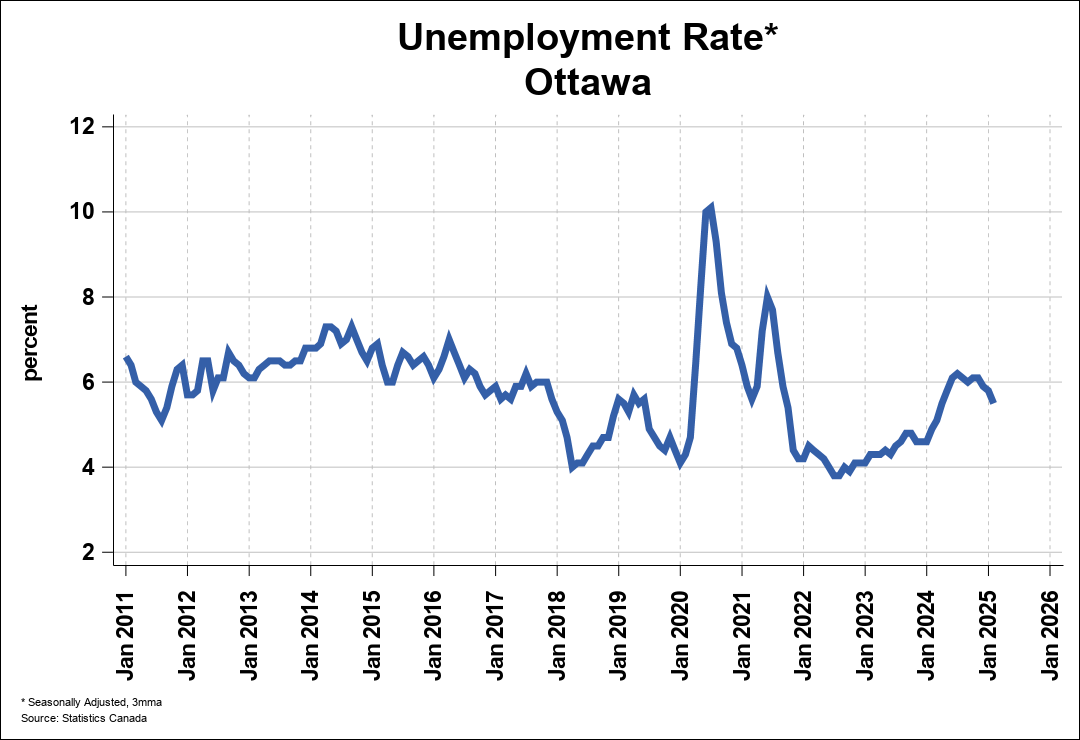
City leadership and regional economic analysts consistently highlight the outsized role Kanata North plays in Ottawa’s employment numbers:
To break into Kanata North, you must utilize the dedicated infrastructure built by the Kanata North Business Association (KNBA):
- Use the Discover Technata Job Board: Unlike generalized job boards where local listings get buried under remote postings, the Discover Technata platform aggregates open requisitions specifically from companies physically located in the park.
- Attend the Annual Discover Technata Career Fair: Hosted at the Brookstreet Hotel on Legget Drive, this is Eastern Ontario’s largest dedicated technology talent expo. Thousands of job seekers meet directly with hiring teams, department heads, and technical recruiters from dozens of exhibiting firms.
- Target Mid-Sized Scaleups Along March Road: While enterprise anchors like Nokia and Ericsson run structured recruitment campaigns, dozens of 50-to-200-person scaleups in Kanata North experience rapid growth cycles where they need immediate hires in development, operations, and product marketing.
For comprehensive employment support and provincial training incentives available across Eastern Ontario, you can also consult Employment Ontario services.
Tactical Summary: How the Top 6 Ottawa Strategies Compare
To help you decide where to allocate your time and job-search energy, the table below breaks down how each strategy performs against our four core evaluation criteria.
| Rank & Strategy | Primary Sectors | Primary Hiring Locations | Average Hiring Speed | Language Barrier | Best Suited Candidate Profile |
|---|---|---|---|---|---|
| #1. Kanata North Ecosystem | Telecom, 5G, SaaS, AutoTech, Chips | March Rd, Legget Dr, Innovation Dr | Fast (2-4 weeks) | Very Low (English primary) | Developers, Product Leads, Hardware Engineers, QA |
| #2. Innovation Hubs & Startups | Early-stage SaaS, AI, CleanTech | Bayview Yards, Hub350, Downtown | Very Fast (1-3 weeks) | Very Low (English primary) | Generalists, Growth Marketers, Full-Stack Devs |
| #3. Higher Ed & Quasi-Public | University Ops, Research Labs, Crowns | Downtown, Ottawa South, Baseline | Moderate (4-8 weeks) | Low to Moderate (Role dependent) | Researchers, Campus Administrators, Facilities Staff |
| #4. Unilingual Tech Targeting | Global Export Software, B2B Sales | Kanata, Centretown, Remote-Hybrid | Fast (2-4 weeks) | None (English-only standard) | English-only candidates leaving civil-service searches |
| #5. Defence & Aerospace | Tactical Comms, Naval Combat, Avionics | Kanata North, Carling Corridor | Moderate (4-12 weeks due to clearances) | Very Low (English primary) | Systems Engineers, Cleared Personnel, Tech Writers |
| #6. Regional Healthcare Networks | Acute Care, Clinical IT, Operations | Civic, General, CHEO, Queensway | Moderate to Slow (4-10 weeks) | Moderate (Higher in patient roles) | Nurses, Clinical Informatics, Hospital Ops, Purchasing |
Executing Your Private-Sector Job Search in Ottawa
Understanding where the jobs exist is only half the battle. Executing a private-sector search in the National Capital Region requires a different day-to-day routine than applying for public competitions.
Stop Writing Bureaucratic Resumes
The most common mistake job seekers make when transitioning from federal job searches to Ottawa’s private sector is submitting a long, five-page, government-style CV. Private tech companies and defence contractors do not read exhaustively detailed administrative statements of merit criteria.
Keep your resume to two pages maximum. Lead with an impactful summary of your technical capabilities, quantify your accomplishments (such as percentage improvements in deployment frequency, budget savings, or revenue generated), and ensure your formatting parses cleanly. If you want objective feedback on how well your materials translate to private hiring managers, getting a professional resume assessment can highlight structural blind spots before you submit applications.
Build Direct Outbound Connections
Ottawa’s private business community is surprisingly tight-knit. Many senior directors at Nokia, Ciena, BlackBerry QNX, and General Dynamics have worked together across multiple companies over the course of their careers.
When you identify an open role in Kanata North or Bayview Yards, do not just click apply and wait. Find the relevant engineering manager, product director, or team lead on professional networking networks. Send a short, personalized note expressing interest in the specific challenges their team is solving, referencing their technical stack or recent product releases.
Focus on Regional Economic Strengths
Ottawa is not trying to replicate Silicon Valley or Toronto’s consumer fintech market. The city’s strengths lie in deep tech, enterprise software, hard engineering, tactical defence systems, and specialized clinical research. Tailor your skills to match those strengths:
- If you are an engineer or software architect, emphasize embedded systems, network security, cloud reliability, and scalable backend services.
- If you are an operations or administrative professional, highlight vendor management, agile project execution, and enterprise resource planning systems.
- If you work in healthcare, focus on digital record transformation, patient-flow optimization, and specialized clinical accreditations.
By focusing your job search on the private-sector corridors along March Road, the collaborative spaces at Bayview Yards, and the region’s expanding healthcare and research institutions, you can build a sustainable, high-paying career in Canada’s capital on your own terms.
Upcoming career fairs
Career fairs in Ottawa
12th edition of the traditional Intercultural Entrepreneurs’ Fair
- Nearby · Gatineau
- Free
Rendez-vous des carrières juridiques de l'UQO 2026
- Nearby · Gatineau
- In person
- Free
Listings are gathered each month from public event pages. Confirm the details with the organizer before you go.
More From the Blog
Bank of Canada Business Outlook Survey: Top 5 Hiring Trends Canadian Job Seekers Must Know
Discover key insights from the Bank of Canada Business Outlook Survey. Learn the top 5 hiring trends and salary shifts to land your next...
Read the articleParks Canada Workforce Adjustments: Conservation Jobs in Canada Outlook
Parks Canada's workforce adjustments affect 2,900 staff. Here is the outlook for conservation jobs in Canada and how to transition your...
Read the articleBioWare Closure: What It Means for Game Development Careers in Canada
EA's BioWare closure reshapes game development careers in Canada. Here is what studio cuts mean for tech talent in Alberta, Vancouver,...
Read the articleReady to Launch Your Career Marketing Campaign?
Book a strategy call and see how Nainly can transform your job search.
Schedule a CallFree consultation. No commitment.