On this page
- Provincial Fault Lines: Where School Boards Face the Deepest Vacancies
- The Rise of Emergency Credentials and Letters of Permission
- Financial Incentives, Loan Forgiveness, and Remote Reality Checks
- What Applicants Must Review in Collective Agreements
- 1. Salary Grid Placement and Experience Crediting
- 2. Instructional Time vs. Assignable Time Caps
- 3. Guaranteed Preparation Time
- 4. Classroom Complexity and Class Size Language
- 5. Contract Type and Conversion Pathways
- Application Strategy: Standing Out to Canadian School Boards
- Acing the School Board Interview
- Summary Checklist for Teaching Applicants in Canada
- The Long-Term Perspective for Canadian Educators
- In brief
- Key takeaways
- Frequently asked questions
When Canadian educator groups marked World Teachers’ Day on October 5, 2026, the public campaigns were full of praise. The Canadian Teachers’ Federation (CTF/FCE) organized the day around “Thank You for Brightening our Future,” and provincial bodies like the Alberta Teachers’ Association (ATA) ran campaigns focused on teaching as a global profession with serious local impact. Inside staff rooms from Victoria to St. John’s, the talk sounded like operational triage.
Behind the hashtags and promotional toolkits, a structural staffing shortage has rewritten hiring across the country. School boards that once sat on thick stacks of applications for every opening now scramble to cover elementary, secondary, and specialized classrooms before the morning bell rings. For anyone looking for teaching jobs in Canada, the market is tricky to read. Vacancies are everywhere on paper, but working conditions, licensing paperwork, and the pressure inside crowded classrooms mean you have to look closely at the fine print of any offer.
October 5 is World Teachers’ Day (WTD), a celebration of the profound impact teachers have on students and the future they help shape. For WTD 2026, the Canadian Teachers’ Federation (CTF/FCE) has adopted the theme Thank You for Brightening our Future.
Source: Alberta Teachers’ Association, World Teachers’ Day celebrates teachers creating a brighter future
Goodwill does not fix an operational shortage. As doors opened for the 2026 school year, school districts in multiple provinces were leaning on emergency authorizations, retired educators on temporary duty, and uncertified substitute teachers just to keep classes running. Building a long career in Canadian public education means looking past the sheer volume of open postings. You have to know where boards face real vacancies, how emergency credentials affect your career path, and what protections your collective agreement gives you once the novelty of a new classroom fades.
Provincial Fault Lines: Where School Boards Face the Deepest Vacancies
Canadian teacher shortages are uneven. While landing a permanent full-time contract to teach high school history in central Toronto or south Calgary is brutally competitive, HR teams in regional districts struggle daily to recruit a certified French immersion teacher or a secondary physics instructor.
Federal projections on Job Bank show steady long-term demand for both elementary school teachers (NOC 41221) and secondary school teachers (NOC 41220), largely pushed by retirements and rising student enrolment. But provincial borders and local demographics change what that hiring pressure looks like on the ground.
In Ontario, the hiring split between big cities and smaller boards is sharp. The Greater Toronto Area has long supply lists full of occasional teachers waiting for permanent contracts. Further north, and across every French-language board in the province, schools run on chronic deficits. French immersion programs inside English boards struggle so hard to staff classrooms that some districts have to trim course offerings or combine classes. High schools across Ontario also report daily shortages in technical education, senior mathematics, and core sciences.
British Columbia pairs geographic distance with an obvious housing squeeze. Enrolments keep climbing in Vancouver and Surrey, but high rents drive early-career teachers away from the Lower Mainland. In rural and northern districts, recruitment headaches have dragged on for years. Boards in School District 59 (Peace River South) and throughout the Northern Interior have seen stretches where roughly 18 to 20 percent of classroom teaching assignments went to staff without provincial certification.
A salary grid that looks decent on paper can feel thin when measured against benchmark rents in Kelowna, Vancouver, or Toronto. How far your take-home pay goes against local living costs matters just as much as your placement on a grid, something we looked at when reviewing StatCan housing data and the cost of living in Canada.
Alberta faces a different sort of pressure. Strong interprovincial migration has brought thousands of families into Calgary, Edmonton, and neighbouring commuter towns. That rapid influx added tens of thousands of students to provincial enrolments over recent years, stretching school facilities and swelling class sizes. Following mounting labour friction and pushback from educators, the provincial government introduced a $200 million Class Size Reduction Grant to fund over 1,400 elementary and junior high positions for the 2026 school year.
Quebec deals with an annual scramble, leaving thousands of classroom positions unfilled right up to the start of the school calendar. To plug the gaps, the province leans heavily on uncertified staff, particularly in vocational programs and elementary classrooms. In Atlantic Canada, districts across Nova Scotia and New Brunswick face persistent recruitment bottlenecks in rural schools. Some rural areas have shrinking cohorts, but acute housing shortages make it a headache to relocate incoming hires.
Blasting identical resumes to the largest urban school boards rarely works. A practical job search means mapping your subject specializations, your willingness to move, and your financial baseline against the districts that are actively trying to fill empty classrooms.
The Rise of Emergency Credentials and Letters of Permission
School boards across Canada now routinely rely on emergency teaching credentials to fill empty classrooms. Depending on the province, these go by different titles, including Letters of Permission (LOP) in Ontario and British Columbia or temporary authority permits elsewhere. Regardless of the name on the paperwork, each mechanism gives a school district legal clearance to place someone without a standard provincial teaching certificate in front of a class.
These authorizations used to be genuine edge cases. Boards pulled them out only for hard-to-staff northern communities or specialized vocational trades where certified instructors simply did not exist. Today, regulators and administrators turn to them as standard operational tools to stop classrooms from sitting empty.
The legal mechanics vary by province. In British Columbia, the Ministry of Education and Child Care grants Letters of Permission under the Teachers Act once a district proves that no certified teacher is available. Although designed to cover temporary, single-school-year gaps, hundreds of BC classrooms now operate under them. Ontario operates under Regulation 142/08 of the Education Act, which requires boards to clear specific hurdles first. A board has to post the opening publicly in daily circulation and on ministerial job boards, verify that no qualified Ontario College of Teachers (OCT) member applied or accepted, and confirm that the candidate meets baseline education rules.
If you are an internationally trained teacher or a subject specialist without an education degree, an emergency credential sounds appealing. It lets you get into a classroom immediately without spending months waiting for credential evaluators to process your paperwork. That said, working under an emergency authorization comes with distinct drawbacks you need to weigh:
To start, you have no job security. These permits cover only a specific school year or a defined assignment. Once the contract ends, the district has to post the job publicly again. If a certified applicant applies for the following school year, most provincial regulations legally compel the school board to hire them over you, even if your evaluations from administrators and parents were stellar.
Seniority is another issue. Under many Canadian collective agreements, days worked on a Letter of Permission earn you zero bargaining unit seniority points. If you eventually complete your Bachelor of Education or receive your provincial certificate, you often find yourself right back at the bottom of the board hiring list.
The pay usually reflects that status. Most boards place uncertified staff on separate, lower wage grids. You still plan lessons, grade assignments, and manage the room like every certified colleague in your hallway, but your paycheque and benefits package are pegged to an uncertified or auxiliary tier.
You also shoulder full classroom liability and the workload of a full-time teacher without complete union backing or formal preparation in provincial assessment standards, curriculum frameworks, and special education requirements.
Educator burnout and the strains caused by these staffing stopgaps remain prominent concerns for Canadian school leaders, as detailed in this review:
If you choose to accept a post under a Letter of Permission, treat it as a stepping stone. It gives you paid classroom experience while you finish an accredited teacher preparation program or wait out your provincial certification file. An emergency permit works well as a temporary bridge, but it will not give you long-term professional stability.
Financial Incentives, Loan Forgiveness, and Remote Reality Checks
High urban living costs push teachers away from city vacancies, while isolation keeps candidates from filling rural posts. To bridge those gaps, governments and school boards rely heavily on financial sweeteners.
Federally, the Canada Student Loan Forgiveness program offers significant relief. Once reserved primarily for healthcare professionals like doctors and nurses, the program now includes eligible teachers and early childhood educators working in designated rural and remote communities. Under this federal system, you can have up to $4,000 a year forgiven on your Canada Student Loans, reaching a maximum lifetime benefit of $20,000 over five consecutive years of service.
At the provincial and district levels, boards add signing bonuses, relocation allowances, and isolation stipends. In northern Alberta, parts of northern British Columbia, and rural school divisions across Manitoba and Saskatchewan, northern allowances typically add between $4,000 and $12,000 annually to a base salary, alongside subsidized housing in specific communities.
Those numbers look great on a job board, but you need to do an honest budget before loading up a moving truck.
The price of goods in remote northern towns is notably higher than down south. A $5,000 annual northern allowance easily gets swallowed within a few months by steep heating bills, expensive groceries, and the travel costs of flying home to visit family or see a medical specialist in a southern urban centre. Subsidized housing is also rarely modern or private. In smaller communities, you may simply share a basic flat with other district staff.
Relocation stipends require careful reading, too, because most packages include strict clawback clauses. If you sign a two-year return-of-service agreement to secure a $6,000 relocation stipend and leave after eight months due to burnout or personal circumstances, the board will require you to repay that bonus in full. In most cases, they deduct it straight from your final paycheque.
These incentives can be an effective way to wipe out student debt while gaining early classroom experience. Still, they only work if the school and the community suit your lifestyle and your emotional resilience holds up.
What Applicants Must Review in Collective Agreements
When a school board hands you an offer letter, you aren’t sitting down with the principal to barter over vacation days or base pay. Public school teaching across Canada runs on union contracts. Your pay scale, daily schedule, prep time, and workplace protections are already hammered out in a collective agreement negotiated by the local teacher affiliate (such as an ATA local, an ETFO/OSSTF bargaining unit, or a BCTF local) and the school division or provincial government.
Plenty of new teachers sign that offer without reading the collective agreement behind it. That is a costly oversight. Reviewing the agreement matters just as much as checking the core terms of any standard job offer, a topic we cover in our guide on job offer letters vs employment contracts in Canada.
Track down these five contractual clauses before signing:
1. Salary Grid Placement and Experience Crediting
Your starting salary comes down to a grid with two axes: your years of recognized post-secondary schooling (your category) and your years of approved classroom experience (your step).
A provincial evaluation body sets your category: the Teacher Qualifications Service (TQS) in Alberta and British Columbia, or the Qualifications Evaluation Council of Ontario (QECO). You need to verify how the division credits prior experience. If you taught for three years in a private school, worked out-of-province, or took contracts as a long-term occasional teacher, does the board credit each year step-for-step, or does it cap previous non-board experience at two steps? A misplacement on the grid can cost you $5,000 to $10,000 per year. While you will not haggle over wage numbers in the interview room, you still need to handle compensation questions properly, just as applicants must know how to answer the salary expectations question in Canada.
2. Instructional Time vs. Assignable Time Caps
Instructional time is what you spend teaching students directly. Assignable time includes those instructional hours plus every other required task: staff meetings, parent-teacher conferences, morning bus duty, hall supervision, and professional development sessions.
Check the actual numbers in the agreement. In Alberta, collective agreements have historically capped assignable time at 1,200 hours per school year, with instructional time capped at 907 hours. If you sign with an independent school or a board with weaker wording, you might get assigned 1,000 instructional hours and heavy recess monitoring, leaving you zero paid time during the school day to build lesson plans or grade student work.
3. Guaranteed Preparation Time
Check whether the collective agreement guarantees dedicated prep time during normal instructional hours. Ontario elementary agreements typically mandate at least 240 minutes of prep time per five-day cycle. In high schools, teachers usually receive one preparation period per semester.
Read what the contract says about internal coverage. When substitute teachers are unavailable, does the agreement allow administrators to assign you to cover another class during your preparation period? If it does, does the contract guarantee extra pay or banked time in return? If a board runs short on substitutes, your prep time evaporates unless the contract provides clear compensation or limits.
4. Classroom Complexity and Class Size Language
Classroom complexity has passed class size as the main driver of teacher burnout in Canada.
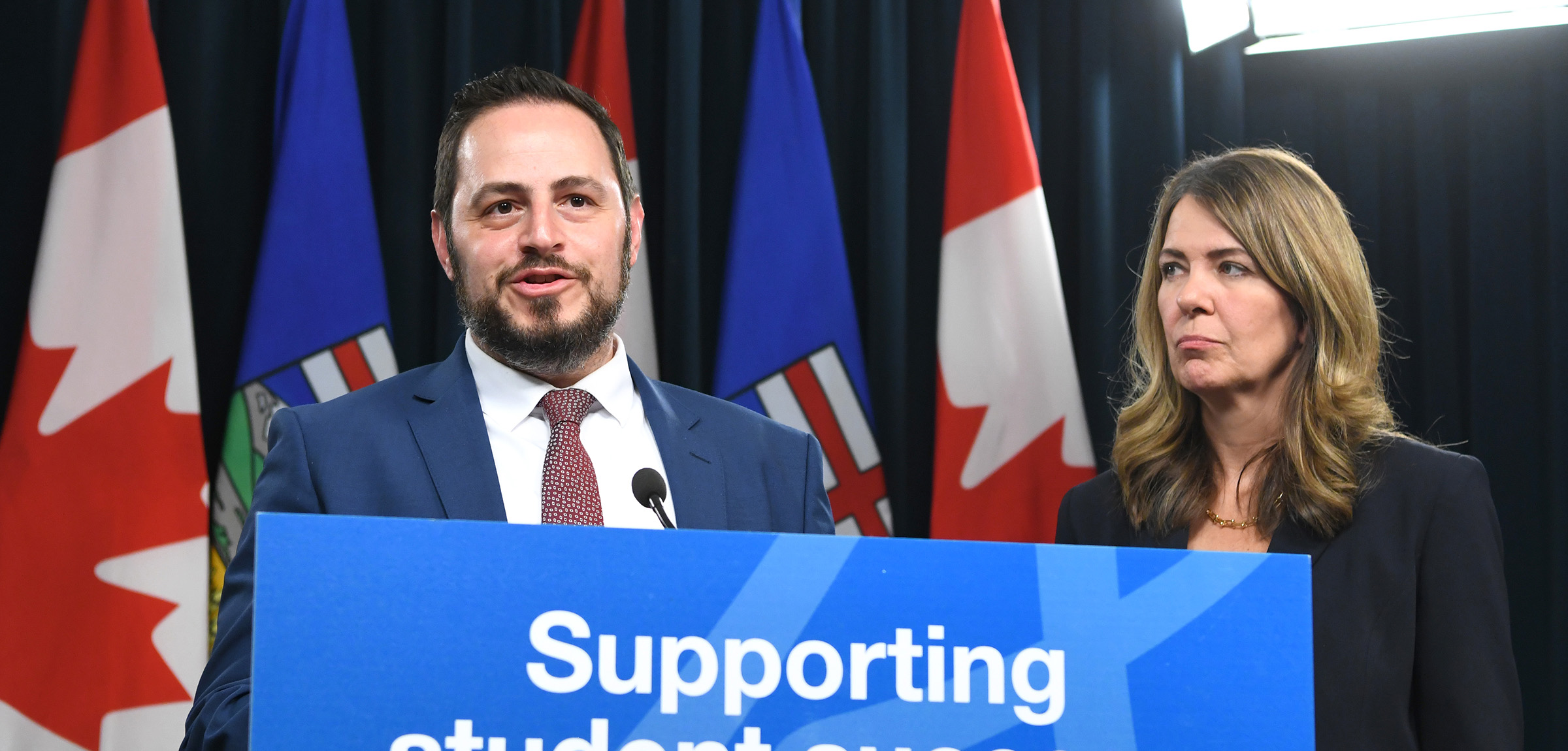
“Every student in Alberta deserves the opportunity to learn in a classroom where they can receive the attention and support they need to thrive,” Schilling said. “And every teacher deserves the professional conditions necessary to meet the diverse needs of their students.”
Source: Alberta Teachers’ Association, Province announces grant to hire teachers, reduce class size
Schilling is right that working conditions directly dictate student outcomes. Look at the collective agreement to see whether class size limits are binding rules or polite suggestions. Look for hard caps on student numbers. Weak phrasing like “the board shall endeavour to maintain an average of 25” leaves the board free to crowd your room.
Look for clauses covering student composition. Some agreements specify that if a classroom includes a certain number of students with specialized Individual Education Plans (IEPs) or complex behavioural needs, the overall class size must drop, or the board must provide a dedicated educational assistant (EA). If the agreement stays silent on complexity, you could easily end up managing severe learning and behavioural needs entirely on your own.
5. Contract Type and Conversion Pathways
A contract type defines your job security. A Temporary Contract or Long-Term Occasional (LTO) contract covers a temporary vacancy, like a parental or medical leave, and terminates on a specified date. A Probationary Contract is the stepping stone to a continuous, permanent contract.
Review how long you must work on temporary or probationary status before gaining permanent tenure. In some boards, completing two consecutive full-year temporary assignments automatically converts you to permanent status. In others, you must re-apply to external postings every spring, leaving you in summer employment limbo.
Application Strategy: Standing Out to Canadian School Boards
Applying to a Canadian school board is nothing like sending an application into the corporate world. For starters, principals do not review cold emails with attached resumes. School boards funnel their hiring through formal applicant tracking systems like ApplyToEducation, Make a Future (in British Columbia), Education Canada, or internal board HR portals.
Getting onto an interview shortlist comes down to two things: a complete dossier upfront and a resume written in the specific vocabulary of Canadian public education.
Hiring committees will not chase missing paperwork. Before you hit submit, assemble your core documents:
- Proof of provincial certification or an eligibility letter from the regulator, such as an OCT Certificate of Qualification, BC Teaching Certificate, or Alberta Interim Professional Certificate.
- An up-to-date Vulnerable Sector Check (VSC) completed by your local police service within the last six months.
- Official university transcripts showing the conferral of your undergraduate degree and Bachelor of Education.
- Formative and summative practicum evaluation reports if you are a recent graduate, or your two most recent formal teacher performance appraisals from administrators.
- Three professional references with direct contact details, including at least one administrator or practicum mentor who has observed your classroom instruction.
Next, adapt your resume language to match public school standards. Applicant tracking systems look for specific pedagogical terms. Make sure you demonstrate familiarity with provincial curriculum frameworks (such as the Ontario Curriculum or the BC Building Student Success framework), Universal Design for Learning (UDL), trauma-informed classroom management, and differentiated assessment.
Keep the document itself focused. Resist the temptation to turn your career history into a four-page catalogue of every workshop you ever attended. Stick to concrete evidence from the classroom. If you are wrestling with how much detail to cut, reviewing the principles in a one-page vs two-page resume in Canada helps you decide what earns a spot. And if you want an experienced set of eyes on how your qualifications read to Canadian hiring teams, a professional resume assessment can catch issues before an ATS screens you out.
Acing the School Board Interview
After your application clears human resources screening, you will face an interview panel. That group usually includes a school principal, a vice-principal, and sometimes a district instructional coordinator.
Teaching interviews in Canada follow structured behavioural and scenario-based formats. Panels take your fondness for children as a given; what they test is your ability to manage an inclusive, compliant, and instructionally rigorous classroom.
Expect questions built around four main areas:
-
Differentiated Instruction and Assessment: When the panel asks how you design lessons for diverse learners, skip vague platitudes about student care. Give concrete practices: describe your tiered tasks, visual schedules for neurodivergent learners, modified reading materials for English Language Learners (ELL), and how you track formative data to guide small-group interventions.
-
Classroom Management and De-escalation: School leaders want to know what happens when a lesson goes sideways. Explain your routines for the first month and how you address disruptive behaviour. When a student is dysregulated, outline your specific de-escalation protocol, keeping the focus on restorative practices, calm communication, and systematic documentation.
-
Parent and Community Communication: Principals spend considerable time mediating disputes between frustrated parents and classroom teachers, so they want staff who get ahead of friction. Describe how you reach out early with positive updates, flag academic or behavioural concerns well before report cards arrive, and document every conversation objectively.
-
Integration of Indigenous Perspectives: Across every Canadian province, embedding Indigenous worldviews and answering Calls to Action 62 and 63 from the Truth and Reconciliation Commission is a mandated professional competency. Be ready to explain how you weave local Indigenous histories, contemporary perspectives, and authentic resources across the curriculum all year long, instead of confining them to an isolated unit.
Summary Checklist for Teaching Applicants in Canada
Before you start firing off applications, keep this checklist handy to make sure you have the basics covered:
- Confirm Your Provincial Credentialing: Check your certification status with your provincial regulator (OCT in Ontario, TRB in BC, or Alberta Education) before applying to any board.
- Calculate Real Cost-of-Living Offsets: If you are weighing a remote or regional position, price out rent, groceries, and travel against the salary grid and any remote stipends.
- Scrutinize the Local Collective Agreement: Read the fine print on assignable versus instructional time, prep time guarantees, class size caps, and pay for internal coverage.
- Clarify Seniority Accumulation: Working under an emergency credential, a Letter of Permission, or a temporary contract? Ask the union rep directly whether your hours build permanent seniority.
- Prepare Scenario-Driven Interview Answers: Build your interview examples around actual classroom experiences, especially when addressing differentiated learning, restorative discipline, and parental communication.
Here is a sharp take from X on the subject:
The Long-Term Perspective for Canadian Educators
There are still compelling reasons to teach in Canada. Defined-benefit pension plans like OTPP in Ontario, ATRF in Alberta, and the BC Teachers’ Pension Plan offer retirement stability that is rare outside the public sector, and predictable salary grids remove pay ambiguity. The work carries real purpose, too.
Day-to-day classroom realities remain tough, however. Staffing shortages acknowledged on World Teachers’ Day in 2026 will not disappear overnight. When you step into the profession understanding specific provincial markets, credentialing rules, and union contract protections, you set yourself up to secure a job and sustain a resilient, fulfilling career in Canada.
Key takeaways
5
- Canadian teacher shortages remain uneven, with strong demand in rural regions and specialties like French immersion contrasting with intense competition in major metropolitan centres.
- School boards frequently rely on Letters of Permission and emergency credentials, which permit uncertified teaching but lack long-term job security and union seniority.
- Financial incentives like federal student loan forgiveness and remote allowances help offset living costs, though isolation and clawback clauses carry financial risks.
- Collective agreements establish essential working parameters, including salary grid placement, instructional caps, guaranteed preparation time, and class complexity rules.
- School board hiring panels evaluate applicants through centralized portals using structured scenario questions focused on differentiated instruction, classroom de-escalation, and Indigenous perspectives.
Frequently asked questions
5
What is a Letter of Permission for Canadian teachers?
A Letter of Permission is a temporary legal authorization that allows a school board to hire an uncertified individual when no certified teacher is available. Provincial ministries grant these permits for specific, temporary assignments. While emergency credentials offer immediate classroom entry, candidates receive lower compensation, earn zero bargaining unit seniority under many collective agreements, and lack job security when certified educators apply for the role.
How does the Canada Student Loan Forgiveness program apply to teachers?
The Canada Student Loan Forgiveness program offers eligible teachers working in designated rural and remote communities up to $4,000 per year in debt relief. Eligible educators can receive a maximum lifetime benefit of $20,000 across five consecutive years of service. This federal incentive helps offset education costs, though educators must balance this financial relief against the higher living expenses and travel costs common in isolated northern regions.
What distinguishes instructional time from assignable time in teacher contracts?
Instructional time covers only the hours spent teaching students directly, whereas assignable time includes instructional hours plus all other duties assigned by school administrators. These additional duties include staff meetings, parent-teacher conferences, student supervision, bus duty, and professional development sessions. Collective agreements specify caps for each category, such as Alberta agreements that have historically capped assignable time at 1,200 hours and instructional time at 907 hours per year.
How do Canadian school boards screen teaching applications?
Canadian school boards screen teaching applications through centralized electronic applicant tracking systems like ApplyToEducation, Education Canada, or Make a Future rather than direct email. Human resources screening panels review candidate files for provincial certification, recent police checks, practicum evaluations, and official transcripts. Resumes must reflect familiarity with provincial curriculum standards, Universal Design for Learning, differentiated assessment, and trauma-informed classroom management strategies to pass tracking filters and secure interviews.
Can working on an emergency credential lead directly to permanent status?
Working on an emergency credential does not grant an automatic pathway to permanent status because these authorizations expire at the end of a specified assignment. Provincial regulations generally require school boards to advertise positions publicly each year and award roles to certified applicants over uncertified permit holders. Days worked on emergency credentials often do not accumulate seniority points on board hiring lists, meaning candidates must still complete standard certification requirements.
Upcoming career fairs
Career fairs in Alberta
Edmonton Career Fair by MCG Careers
- In person
- Free
Career Expo 2026
- In person
Cold Lake Chamber of Commerce Job Fair
- In person
Listings are gathered each month from public event pages. Confirm the details with the organizer before you go.
More From the Blog
Best Ways to Secure New Grad Jobs in Canada During Fall Campus Hiring
Discover the best ways to land new grad jobs in Canada during fall campus recruitment, beat corporate screening filters, and secure...
Read the articleTD Economics AI Study: What AI and Jobs in Canada Look Like for Workers
A TD Economics study reveals AI and jobs in Canada will see gradual change over mass layoffs. Learn how slower hiring impacts workers and...
Read the articleIntuit Report: Navigating Small Business Hiring in Canada This Fall
Discover what conservative fall hiring sentiment means for job seekers and how to stand out in small business hiring in Canada this season.
Read the articleReady to Launch Your Career Marketing Campaign?
Book a strategy call and see how Nainly can transform your job search.
Schedule a CallFree consultation. No commitment.