On this page
- How We Ranked Alberta’s Most In-Demand Skilled Trades
- 1. Heavy Equipment Technician (HET)
- Why Demand Is Relentless
- The Apprenticeship Structure
- How to Get Hired
- 2. Industrial Mechanic (Millwright)
- Why Demand Is Strong
- The Apprenticeship Structure
- How to Get Hired
- 3. Electrician (Construction and Industrial)
- The Registration Numbers and Wage Realities
- The Apprenticeship Structure
- How to Get Hired
- 4. Steamfitter-Pipefitter
- High Earnings in Heavy Industry
- The Apprenticeship Structure
- How to Get Hired
- 5. Welder (Journeyperson & B-Pressure)
- Career Paths and Earning Power
- The Apprenticeship Structure
- How to Get Hired
- 6. Plumber and Gasfitter
- Steady Long-Term Demand
- The Apprenticeship Structure
- How to Get Hired
- Comparing the Top 6 Skilled Trades in Alberta
- The Broader Canadian Context: Why Trades Matter Right Now
- Step-by-Step Guide: How to Get Hired and Indentured in Alberta
- Step 1: Secure Your Baseline Safety Tickets Before Applying
- Step 2: Build a Trade-Specific Resume
- Step 3: Run the In-Person “Cold Drop” Strategy
- Step 4: Explore Union Hiring Halls vs. Open-Shop Contractors
- Step 5: Complete Your Registration on MyTradesecrets
- Financial Grants, Tool Deductions, and Training Supports
- How to Protect Yourself and Succeed on Alberta Job Sites
If you talk to ten different contractors in Alberta right now, you will hear the exact same complaint from nine of them: they cannot find enough qualified hands.
Alberta is in the middle of a massive demographic and industrial shift. The province is managing major resource expansions, hydrogen facilities in the Industrial Heartland, commercial infrastructure in Calgary and Edmonton, and civil engineering projects across the north. At the same time, thousands of experienced journeypersons are hanging up their hard hats and heading into retirement.
The shortage is real, but here is what the promotional flyers and political speeches do not tell you: getting hired into an apprenticeship is not automatic. Walking into a trailer with zero preparation and asking someone to sponsor you will get you shown the gate. Employers want people who understand how the Alberta apprenticeship system works, carry the right baseline safety tickets, and show immediate mechanical aptitude.
If you are targeting skilled trades jobs in Alberta, you need to know which trades offer genuine long-term demand, what they actually pay on the cheque, and the exact steps required to land a sponsor employer through Apprenticeship and Industry Training (AIT).
How We Ranked Alberta’s Most In-Demand Skilled Trades
Not every trade offers the same balance of job security, compensation, and entry access. To identify the top six trade occupations in Alberta, we evaluated official government and industry datasets using four distinct criteria:
- Active hiring volume and provincial registration: We pulled registration data from the Apprenticeship and Industry Training Registrar’s Report, cross-referencing which trades maintain the deepest talent pipelines and largest annual employment counts.
- Wage trajectory and earning ceilings: We examined baseline hourly rates from the Alberta ALIS Wage and Salary Survey and regional prevailing wages tracked by the Government of Canada Job Bank, factoring in overtime and remote camp uplift.
- Versatility across multiple economic sectors: Trades tied strictly to one cyclical sector face painful boom-and-bust layoffs. We prioritized occupations that operate across oil and gas, municipal infrastructure, renewable energy, manufacturing, and commercial construction.
- First-year barrier to entry: We assessed how realistic it is for an un-ticketed beginner or career changer to secure a sponsor employer without years of prior connections.
We ranked these trades starting with our top overall recommendation (#1) down to #6. Heavy Equipment Technicians take the top spot because their skills cross virtually every industrial sector in Western Canada with relentless year-round demand.
Here is how the top six trades break down across the province.
1. Heavy Equipment Technician (HET)
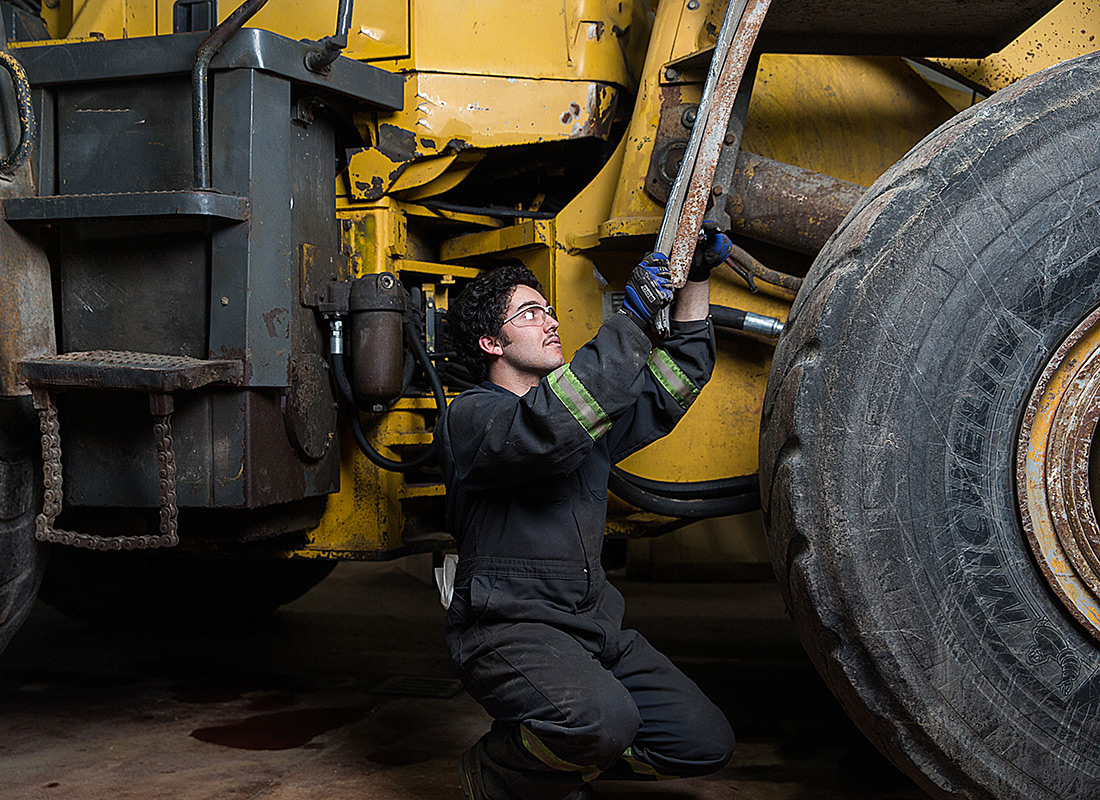
If there is a single trade in Alberta where employers never stop recruiting, it is the Heavy Equipment Technician (NOC 72401). Heavy equipment technicians overhaul, maintain, and troubleshoot the massive machinery that keeps Alberta’s primary industries moving: haul trucks, excavators, dozers, hydraulic shovels, highway transport tractors, and agricultural combines.
Why Demand Is Relentless
Alberta is home to massive surface mining operations in the Athabasca oil sands, thousands of kilometres of forestry roads, continuous highway expansion projects, and an enormous agricultural belt. None of those industries function when machines break down. According to the Alberta ALIS Occupational Profile, heavy equipment technicians earn an average provincial wage of $36.87 per hour ($77,840 annually), with the occupational outlook rated as “Hot.”
In reality, experienced off-road heavy equipment technicians working rotational fly-in, fly-out (FIFO) schedules in the Wood Buffalo region or major equipment dealership branches in Nisku, Acheson, and Clairmont routinely clear $50.00 to $65.00 per hour plus overtime and retention premiums.
The Apprenticeship Structure
The Heavy Equipment Technician trade is a four-year apprenticeship regulated by AIT. Each apprenticeship period requires:
- A minimum of 1,500 hours of paid on-the-job training.
- 8 weeks of technical classroom instruction per period at institutions such as NAIT (Edmonton), SAIT (Calgary), Northwestern Polytech (Fairview/Grande Prairie), Red Deer Polytechnic, or Keyano College (Fort McMurray).
Alberta also offers branch certifications within the trade, including Heavy Duty Equipment Mechanic (Off-Road), Truck and Transport Mechanic (On-Road), and Transport Trailer Mechanic. Completing the full four-period program earns you your Alberta Journeyperson Certificate and qualifies you to write the Interprovincial Red Seal exam.
How to Get Hired
Dealerships like Finning Cat, Brandt Tractor, SMS Equipment, and heavy civil contractors rarely hire first-year apprentices straight off an online job board. The proven route into this trade is starting as a “Shop Hand,” “Lube Technician,” or “Wash Bay Attendant.”
Spend three to six months washing tracks, staging parts, organizing tooling, and demonstrating that you arrive fifteen minutes early every single shift. Once the service manager sees your work ethic and basic mechanical aptitude, you ask for your blue book and indentureship contract. Holding a clean Class 3 or Class 1 driver’s license with air brake (Q) endorsement will push your application to the top of any service manager’s pile.
2. Industrial Mechanic (Millwright)
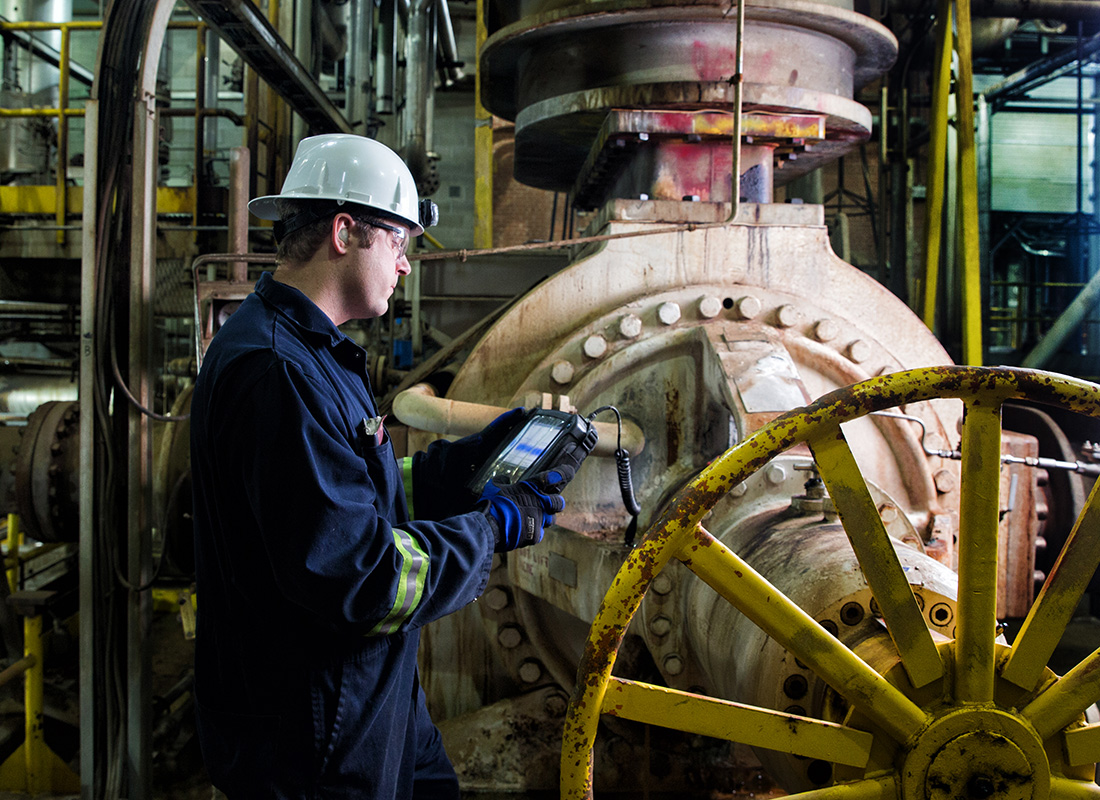
Millwrights (NOC 72400) are the master problem-solvers of the industrial world. They install, maintain, dismantle, align, and troubleshoot stationary industrial machinery and mechanical systems. Wherever things spin, pump, compress, convey, or generate power, millwrights are essential.
Why Demand Is Strong
Unlike trades tied directly to initial construction starts, millwright demand remains steady during economic downturns because operational plants still require routine maintenance, overhauls, and annual turnarounds. Alberta’s Petrochemical Heartland around Fort Saskatchewan, the manufacturing and food processing plants surrounding Calgary, power generating facilities, and pulp mills across northern Alberta rely heavily on precision millwrighting.
According to data published by ALIS Alberta, industrial mechanics earn an average wage of $38.86 per hour ($80,202 per year), with the long-term outlook rated as “Hot.” On turnaround contracts and industrial shutdown projects, millwrights working through union dispatch or specialized mechanical service firms earn significantly higher hourly packages with extensive double-time provisions.
The Apprenticeship Structure
A millwright apprenticeship consists of four periods. Each period demands:
- 1,560 hours of on-the-job training.
- 8 weeks of technical training per period at NAIT, SAIT, or Red Deer Polytechnic.
The curriculum covers optical and laser alignment, rigging, vibration analysis, hydraulic and pneumatic circuit diagnostics, conveyor assembly, and dynamic balancing of turbines and pumps.
How to Get Hired
To break into millwrighting, target industrial mechanical contractors, packaging plants, agricultural processing facilities, and union dispatch halls like Millwrights Local 1460 (Alberta).
Highlight any past background in basic metal fabrication, mechanical assembly, or preventative maintenance. If you are job hunting in Calgary or Edmonton, drop resumes in person at industrial business parks in SE Calgary, Acheson, and Nisku. Ask directly for the maintenance superintendent or master mechanic. Show that you own your basic hand tools and understand optical leveling and shaft alignment principles.
3. Electrician (Construction and Industrial)
The electrical trade (NOC 72200) represents the largest registered apprenticeship pool in Alberta. From wiring commercial office towers and high-density residential developments to configuring complex variable frequency drives (VFDs) and programmable logic controllers (PLCs) in gas plants, electricians build and power Alberta’s physical infrastructure.
The video below covers how the provincial trade registration system operates and what apprentices experience when entering the trade in Alberta.
The Registration Numbers and Wage Realities
According to the Apprenticeship and Industry Training Registrar’s Report, the electrician trade continues to lead the province in apprentice registrations.
The electrician program remained the largest in the province with about 13,000 apprentices, a 16% increase year over year. The plumber program grew 24% and the carpenter program also increased by 15% year over year.
Source: Alberta Construction Association, Alberta’s Apprenticeship System Reaches Record Levels in 2024-25
Official wage figures on ALIS Alberta report an average wage of $38.41 per hour ($81,919 per year) for construction electricians and $40.13 per hour ($89,593 per year) for industrial electricians.
The electrical field gives you broad career mobility. If commercial construction cools down, electricians can pivot into industrial maintenance, solar farm installations across southern Alberta, automation controls, or high-voltage utility work.
The Apprenticeship Structure
Becoming a certified journeyperson electrician requires completing a four-year apprenticeship:
- 1,500 hours of practical work experience per period.
- 8 weeks of technical classroom training in each of the four periods.
Training covers the Canadian Electrical Code (Part 1), single-phase and three-phase power distribution, motor control systems, blueprint reading, and electrical safety standards (such as CSA Z462).
How to Get Hired
Because electrical is the most popular trade in Alberta, entry-level competition is stiff. Applying blindly on online job boards alongside hundreds of other applicants rarely yields interviews.
Instead, tap into the hidden job market Canada provides by contacting mid-sized electrical subcontractors directly. Visit the International Brotherhood of Electrical Workers (IBEW Local 424 in Edmonton and Calgary) to inquire about their pre-apprenticeship intake lists.
Make sure you know basic electrical theory, have your CSTS 2020 and WHMIS completed, and show that you can accurately read a tape measure and use basic power tools without hand-holding. If you need help polishing your background to highlight transferable mechanical skills, getting a professional resume assessment can ensure your resume clears employer screening.
4. Steamfitter-Pipefitter
Steamfitter-pipefitters (NOC 72301) fabricate, install, maintain, and repair high-pressure piping systems carrying steam, water, chemicals, fuel, and industrial gases. Their work is the literal backbone of refineries, pulp mills, thermal generation plants, central heating plants, and natural gas facilities across Alberta.
High Earnings in Heavy Industry
Steamfitter-pipefitters earn some of the highest baseline wages among Alberta’s mechanical trades. According to the Alberta ALIS Wage and Salary Survey, steamfitters and pipefitters earn an average wage of $43.44 per hour ($91,951 annually), with short-term forecast ratings remaining “Hot.”
On major industrial pipeline and turnaround sites, skilled pipefitters working 14-and-7 or 20-and-8 shift rotations with living-out allowances (LOA) regularly earn between $110,000 and $150,000 per year.
The Apprenticeship Structure
The steamfitter-pipefitter program requires:
- Four apprenticeship periods with 1,500 hours of field experience per period.
- 8 weeks of technical classroom instruction per period at polytechnics such as NAIT, SAIT, or Northwestern Polytech.
Apprentices master pipe layout, isometric drawing interpretation, rigging and hoisting, torch cutting, pipe beveling, valve maintenance, and testing under ASME B31.1 and B31.3 piping codes.
How to Get Hired
The quickest entry route into the pipe trades is through union hiring halls and dedicated industrial fabrication shops. The United Association (UA) Local 488 in Edmonton (the largest pipefitting local union in North America) and UA Local 496 in Calgary regularly run recruitment intakes for pipefitting and steamfitting apprentices.
If you go the non-union route, approach industrial mechanical contractors like Ledcor, Graham, PCL, and Flint Corp. Start as a mechanical helper or pipe trade labourer during spring and autumn turnaround seasons. Prove you are safety-conscious, reliable on night shifts, and comfortable working at heights before requesting your apprenticeship registration.
5. Welder (Journeyperson & B-Pressure)
Welding (NOC 72106) is an art, a science, and one of Alberta’s most universally applicable trades. Welders join and cut metal parts using processes such as Shielded Metal Arc Welding (SMAW/Stick), Gas Metal Arc Welding (GMAW/MIG), Gas Tungsten Arc Welding (GTAW/TIG), and Flux-Cored Arc Welding (FCAW).
Career Paths and Earning Power
Alberta’s industrial fabricators, pipeline operators, pressure vessel manufacturers, and mining fleets cannot operate without certified welders. The ALIS Alberta Occupational Profile documents an average wage of $37.72 per hour ($79,452 per year) for welders across Alberta.
However, the welding trade offers sharp wage stratification depending on your certification level:
- Shop Structural Welder: Typically earns between $28.00 and $38.00 per hour fabricating skids, structural beams, and architectural assemblies.
- B-Pressure Journeyperson Welder: Certified under ABSA (Alberta Boilers Safety Association) to weld pressure vessels and piping, earning $45.00 to $55.00+ per hour on industrial projects.
- Rig Welder (Owner-Operator): Contractors who supply their own customized welding truck, machine, and consumables on pipelines or plant sites can invoice between $100.00 and $150.00+ per hour.
The Apprenticeship Structure
The Welder trade in Alberta is a three-year apprenticeship program:
- 1,500 hours of practical work experience per period.
- 8 weeks of technical classroom training in each period.
In addition to provincial journeyperson certification and the Red Seal endorsement, welders in Alberta frequently test for Canadian Welding Bureau (CWB) tickets (such as SMAW and FCAW in flat, horizontal, vertical, and overhead positions) and ABSA B-Pressure performance qualification tickets (such as the standard 2-inch and 6-inch 6G schedule 80 pipe tests).
How to Get Hired
Welding is a trade where you get tested on the spot. Employers will rarely take your word for your skill level; they will put you in a welding booth and ask you to run a bead, cut a bevel, or perform a bend test.
If you have zero formal experience, start by completing a pre-employment welding certificate at a college or working as a shop helper in a custom fabrication facility in Nisku, Acheson, or Calgary’s Foothills Industrial area. Sweep floors, deburr steel, grind bevels, tack fit-ups, and practice running beads during your lunch breaks. When the shop foreman sees you laying clean, consistent stringers with proper penetration, they will sign your apprenticeship papers.
6. Plumber and Gasfitter
Plumbing (NOC 72300) is one of the most recession-resistant trades you can choose. Plumbers install, maintain, and repair water supplies, waste lines, gas systems, hydronic heating, and fixtures across residential homes, multi-family condominiums, hospitals, schools, and commercial facilities.
Steady Long-Term Demand
As Alberta’s population expands, housing starts, multi-family developments, and institutional construction continue to create strong hiring requirements. Data from ALIS Alberta indicates that plumbers earn an average wage of $39.24 per hour ($83,219 per year).
Plumbers also enjoy one of the easiest paths to starting their own independent contracting business once they earn their Journeyperson and Master Plumber certifications. Residential service plumbers who troubleshoot emergency leaks, sewer backups, and furnace/water heater replacements often earn substantial commission and on-call pay on top of base hourly wages.
The Apprenticeship Structure
The plumbing apprenticeship spans four years:
- 1,500 hours of on-the-job training per period.
- 8 weeks of technical training in periods 1, 2, and 3; 8 weeks in period 4.
Most plumbers in Alberta also complete their Gasfitter (Class B) certification concurrently or immediately following their plumbing ticket, allowing them to install and service natural gas appliances up to 400,000 BTUs.
How to Get Hired
Decide first whether you prefer new construction rough-in work (heavy physical installation on construction sites) or residential/commercial service work (troubleshooting, customer interaction, diagnostic repairs).
For new construction, drop off your resume with mechanical subcontractors working on multi-family developments or commercial sites. For service work, approach established plumbing and heating companies. Emphasize a clean driver’s abstract, strong communication skills, and reliability. Mechanical contractors are frequently eager to hire first-year apprentices who are energetic, physically fit, and ready to haul pipe and dig trenches without complaint.
Comparing the Top 6 Skilled Trades in Alberta
To help you weigh your options, here is how the top six trades compare side by side based on official Alberta ALIS wage surveys, apprenticeship durations, and core industry sectors.
| Skilled Trade (NOC) | Average Hourly Wage | Average Annual Salary | Apprenticeship Length | Primary Industry Sectors in Alberta |
|---|---|---|---|---|
| Heavy Equipment Technician (72401) | $36.87 / hr | $77,840 | 4 Periods (6,000 hrs) | Mining, Oil Sands, Civil Infrastructure, Forestry, Agriculture |
| Industrial Mechanic / Millwright (72400) | $38.86 / hr | $80,202 | 4 Periods (6,240 hrs) | Petrochemical Heartland, Manufacturing, Power Generation, Turnarounds |
| Electrician (Industrial / Construction) (72200) | $38.41, $40.13 / hr | $81,919, $89,593 | 4 Periods (6,000 hrs) | Commercial ICI, Residential, Renewables (Solar/Wind), Energy Facilities |
| Steamfitter-Pipefitter (72301) | $43.44 / hr | $91,951 | 4 Periods (6,000 hrs) | Oil Refineries, Chemical Processing, Pipeline Stations, Heavy Industrial |
| Welder (72106) | $37.72 / hr | $79,452 | 3 Periods (4,500 hrs) | Structural Steel, Pressure Vessels, Pipeline, Rig Welding Contracts |
| Plumber (72300) | $39.24 / hr | $83,219 | 4 Periods (6,000 hrs) | Residential Framing, Commercial Buildings, Service Plumbing, Gasfitting |
Note: Wage and salary figures reflect average baseline rates reported on the official Alberta ALIS Wage and Salary Survey. Actual compensation on remote camp, FIFO, and heavy industrial overtime schedules frequently exceeds these baseline averages.
The Broader Canadian Context: Why Trades Matter Right Now
The skilled trades demand in Alberta is part of a broader national demographic squeeze. Across the country, tens of thousands of experienced tradespeople are reaching retirement age, while the demand for housing, clean energy infrastructure, and industrial maintenance keeps climbing.
This national shortage means that once you earn an Alberta Journeyperson Certificate with a Red Seal endorsement, your credential is fully recognized across Canada. You gain geographic mobility to work anywhere from British Columbia to Newfoundland without retraining.
Step-by-Step Guide: How to Get Hired and Indentured in Alberta
Many aspiring tradespeople get stuck in a classic chicken-and-egg problem: you cannot register as an apprentice with AIT until an employer agrees to sponsor you, but employers often prefer people who are already registered apprentices.
Here is the exact step-by-step roadmap to break that cycle and get indentured in Alberta.
+-------------------------------------------------------------+
| Step 1: Secure Mandatory Baseline Safety Tickets            |
| (CSTS 2020, First Aid, WHMIS, Driver's Abstract)            |
+------------------------------+------------------------------+
                               |
                               v
+-------------------------------------------------------------+
| Step 2: Build a Trade-Targeted Resume & Tool Inventory       |
| (Highlight hands-on tools, physical labour, PPE ready)     |
+------------------------------+------------------------------+
                               |
                               v
+-------------------------------------------------------------+
| Step 3: Target Employer Hubs via Direct Drop & Union Intake  |
| (Industrial parks, Nisku/Acheson/Calgary SE, union locals)   |
+------------------------------+------------------------------+
                               |
                               v
+-------------------------------------------------------------+
| Step 4: Secure Entry-Level Role & Complete Probation         |
| (Work as helper/labourer, demonstrate reliability & safety)  |
+------------------------------+------------------------------+
                               |
                               v
+-------------------------------------------------------------+
| Step 5: Complete MyTradesecrets Registration via AIT        |
| (Employer initiates contract, apprentice receives Blue Book)|
+-------------------------------------------------------------+
Step 1: Secure Your Baseline Safety Tickets Before Applying
Do not wait for an employer to send you to safety training. Showing up with active, accredited safety tickets demonstrates you are serious and can be dispatched to a work site immediately without downtime.
Before sending out a single resume, obtain the following:
- CSTS 2020 (Construction Safety Training System): Available online through the Alberta Construction Safety Association (ACSA). Many contractors require this before you step foot on any industrial or commercial property.
- Standard First Aid with CPR Level C / AED: A two-day in-person course recognized by Alberta Occupational Health and Safety (OH&S).
- WHMIS 2015 (GHS): Workplace Hazardous Materials Information System certification.
- Clean 3-Year Commercial Driver’s Abstract: Most trade contractors supply service vans or work trucks. A clean driving record is mandatory.
- Trade-Specific Extras (If Targeting Industrial/Energy): Common Safety Orientation (CSO via Energy Safety Canada), Fall Protection, Confined Space Entry, or H2S Alive.
Step 2: Build a Trade-Specific Resume
Throw away generic chronological resumes designed for retail or office roles. Construction foremen and shop superintendents do not care about buzzwords; they want practical facts.
When you tailor your resume for Alberta trade jobs:
- Lead with your safety tickets and valid licenses at the very top of page one.
- List your hand and power tool proficiencies: Mention specific equipment you know how to operate (grinders, torque wrenches, multi-meters, bandsaws, threading machines).
- Highlight physical stamina and outdoor work experience: Emphasize past work in framing, warehouse loading, landscaping, farm labour, or oilfield operations.
- State clearly that you have reliable transportation and your own PPE (CSA-approved steel-toed boots, hard hat, safety glasses, high-visibility vest).
If you are a newcomer to Canada trying to establish your background, review our guide on how to get Canadian work experience to understand how foreign trade skills can be translated for Alberta hiring managers.
Step 3: Run the In-Person “Cold Drop” Strategy
Applying through large aggregate job portals alone will leave you frustrated. The vast majority of first-year apprentices in Alberta are hired through direct shop drops and personal introductions.
Here is how to execute this effectively:
- Identify the industrial clusters: Map out contractors in Nisku Industrial Park, Acheson Industrial Area, Edmonton (Southeast & Northwest industrial zones), Calgary (Foothills, Great Plains, Manchester), Red Deer (Edgar Industrial Park), and Grande Prairie (Clairmont).
- Arrive between 6:30 AM and 7:30 AM or around 3:30 PM: That is when foremen, superintendents, and shop managers are in the yard before crews dispatch or as they return. Avoid showing up in the middle of the day.
- Dress appropriately: Wear clean work boots, clean work pants (Carhartts or equivalent), and a durable jacket. Do not show up in a business suit, and do not show up in sweatpants.
- Ask for the shop manager or field superintendent: Introduce yourself clearly: “Good morning, my name is Alex. I’ve got my CSTS 2020, First Aid, a clean driver’s abstract, and my own hand tools. I’m looking to start as a shop helper or first-year apprentice and earn my hours. Are you taking on hands right now?”
- Leave a hard-copy resume with your contact information bolded at the top.
Step 4: Explore Union Hiring Halls vs. Open-Shop Contractors
In Alberta, you can pursue your apprenticeship through two parallel tracks:
The Union Route (Building Trades of Alberta)
Union halls provide collective bargaining agreements, defined pension and health benefits, and structured apprenticeship training programs. Many unions maintain pre-apprenticeship lists where you can take introductory safety and tool courses before being dispatched to industrial project sites.
- IBEW Local 424 (Electricians)
- UA Local 488 / UA Local 496 (Plumbers, Steamfitters, Pipefitters, Welders)
- Millwrights Local 1460 (Industrial Mechanics)
- Boilermakers Local 146 (Pressure Welders and Fitters)
- Ironworkers Local 720 / Local 725 (Structural Steel / Riggers)
- IUOE Local 955 (Heavy Equipment and Crane Operators)
The Open-Shop Route (Merit Contractors Association & Independent Employers)
Open-shop employers represent the majority of residential, commercial, and mid-sized industrial contractors across Alberta. You are hired directly by the company, agree on an hourly wage, and your employer sponsors your apprenticeship directly through AIT. Open-shop environments often provide faster exposure to varied daily tasks on smaller job sites.
Step 5: Complete Your Registration on MyTradesecrets
Once an employer agrees to sponsor you:
- Create an account on the official Alberta government portal: MyTradesecrets (via Tradesecrets Alberta).
- You will need your Alberta Student Number (ASN). If you do not have one, the system will generate one for you during registration.
- Submit an Apprenticeship Application online and pay the provincial registration fee.
- Your employer will receive an electronic notification to confirm the sponsorship agreement and verify that a certified journeyperson will supervise your hours.
- Once approved by AIT, you will receive your official Apprentice Identification Card and your physical Apprentice Record Book (Blue Book).
You are now officially an indentured apprentice in the province of Alberta.
Financial Grants, Tool Deductions, and Training Supports
One of the greatest advantages of pursuing skilled trades jobs in Alberta is that you earn money while learning, avoiding massive student debt. In addition to your regular wages, several federal and provincial financial incentives support apprentices:
- Canada Apprenticeship Loan: Eligible apprentices registered in Red Seal trades can apply for interest-free loans of up to $4,000 per period of technical training through the Government of Canada to cover living costs, tools, and tuition while in class.
- Apprenticeship Incentive and Completion Grants: Federal grant programs offer cash grants when you successfully complete level 1 and level 2 training, plus completion bonuses upon earning your Red Seal certification.
- Employment Insurance (EI) During Technical Training: When you take time off work to attend your mandatory 8-week technical training at SAIT, NAIT, or another polytechnic, you can collect regular EI benefits to replace a portion of your income while studying.
- Tradesperson’s Tool Deduction: Under the Canadian Income Tax Act, apprentices and employed tradespeople can claim a tax deduction for the cost of eligible new tools purchased for employment.
- Alberta Apprenticeship Scholarships: The Alberta Apprenticeship and Industry Training Board awards hundreds of scholarships annually (typically $1,000 each) to high-achieving apprentices across all periods.
How to Protect Yourself and Succeed on Alberta Job Sites
Landing your first trade job is only the beginning. The industrial job site culture in Alberta values reliability, humility, and acute safety awareness above all else.
Keep these practical rules in mind during your first six months:
- If you do not know, ask: In the trades, guessing gets equipment damaged or people injured. If a journeyperson gives you an unfamiliar instruction, repeat it back and ask for clarification.
- Protect your body: Invest in premium footwear, knee pads, high-grade ear protection, and safety glasses that do not fog up. Your joints and hearing are your livelihood.
- Log your hours diligently: Keep your Apprentice Record Book (Blue Book) updated every month. Ensure your supervising journeyperson and employer sign off on your hours before you move to a new contractor.
- Stay ahead of technical training schedules: Classroom seats at NAIT and SAIT fill up months in advance. The moment you accumulate your required on-the-job hours for a period, register for your next classroom intake to avoid career delays.
By picking an in-demand trade, preparing your baseline certifications, and approaching local employers with a practical, hardworking mindset, you can build a stable, highly paid career in the heart of Western Canada’s industrial economy.
Upcoming career fairs
Career fairs in Alberta
Sherwood Park Virtual Job Fair Oct 20, 2026
- Online
- Free
Red Deer Financial Job Fair
- In person
- Free
Subcontractor Trade Show & Hiring Expo
- In person
- Free
Listings are gathered each month from public event pages. Confirm the details with the organizer before you go.
More From the Blog
StatCan Study: Outlook for Healthcare Jobs in Canada
Discover how the StatCan study impacts healthcare jobs in Canada, from nursing vacancy trends to provincial licensing rules and hospital...
Read the articleSeptember 2026 Consumer Price Index: Top 5 Salary Takeaways for Canadian Job Seekers
Explore the September 2026 Consumer Price Index and discover the top 5 salary takeaways Canadian job seekers need to negotiate pay and...
Read the articleExpress Entry Overhaul: How High-Paying Jobs in Canada Score More CRS Points
Learn how high-paying jobs in Canada affect Express Entry CRS points, which occupations qualify, and what workers should check before...
Read the articleReady to Launch Your Career Marketing Campaign?
Book a strategy call and see how Nainly can transform your job search.
Schedule a CallFree consultation. No commitment.