On this page
- Strategy 6: Target the Marine Defence and Industrial Shipbuilding Triangle in Esquimalt
- Strategy 5: Embed Directly in the Local Tech Sector Through VIATEC and Community Channels
- Strategy 4: Systematize Institutional Applications with Island Health and Regional Public Authorities
- Map the Job Categories on VI Hire
- Focus on Adjacent Public Agencies
- Strategy 3: Crack the BC Public Service Merit-Based Questionnaire System
- The Screening Questionnaire Is the Real Gatekeeper
- Master the Behavioural Competencies Framework
- Strategy 2: Account for Island Hiring Timelines and Cross-Strait Logistics
- Strategy 1: Neutralize the Island Relocation Bias Directly in Your Cover Letter
- Moving Forward on Vancouver Island
- In brief
- Key takeaways
- Frequently asked questions
Victoria still carries an odd reputation among Canadian job seekers. Talk to people who tried relocating here a decade ago, and they will tell you the capital is reserved for provincial bureaucrats, university faculty, and retirees, where getting hired without deep family roots feels impossible. Talk to casual observers on the mainland, and they look across the water at the Inner Harbour and figure the entire local economy runs on Vancouver tourism spills.
Neither view matches the ground reality on southern Vancouver Island.
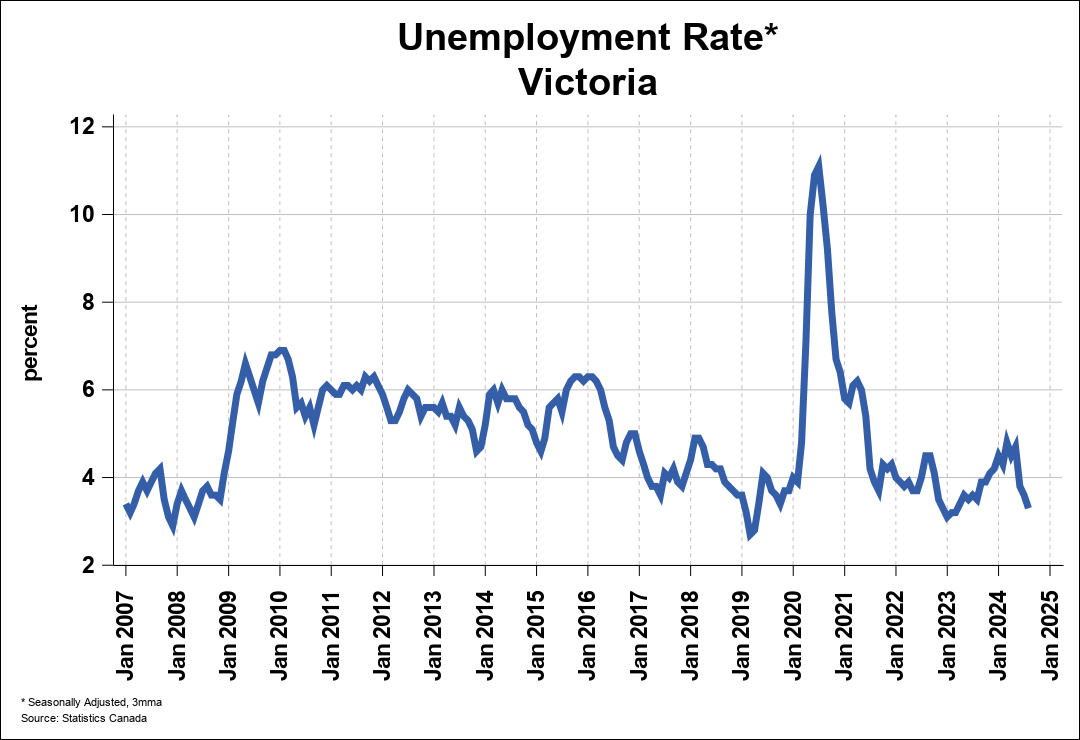
The numbers look encouraging on paper. In the September 2026 Labour Force Survey from Statistics Canada, the Victoria census metropolitan area recorded an unemployment rate of 5.3%, well below the national rate of 7.1% for that same period. But anyone who has sent fifty resumes into the local silence knows low unemployment does not make hiring smooth. Finding work here involves specific regional friction. Four dominant sectors drive hiring, an expensive strait separates the region from the mainland, and local managers value long-term island commitment over flashy resumes.
To land interviews, you have to plan around those physical realities. Employers here hesitate over out-of-town applicants because of the tight regional housing market and the commute fatigue that comes with ferry travel. Meanwhile, major public bodies like the provincial government and regional health authorities run on rigid, points-based scoring grids that filter out strong resumes when the wording misses their exact administrative phrasing.
We looked at how candidates successfully land work across Greater Victoria and ranked the methods using two practical criteria:
- Volume and Stability: How much steady hiring demand the channel controls across the Capital Regional District.
- Offer Conversion Velocity: How directly the approach tackles the specific hesitation that stalls Victoria hiring committees.
Here is the countdown from Strategy 6 to Strategy 1. We start with technical and industrial sectors, then work down to the single biggest factor that determines whether you receive an offer or get screened out.
Strategy 6: Target the Marine Defence and Industrial Shipbuilding Triangle in Esquimalt
Most job seekers heading to southern Vancouver Island look at tech startups or provincial government ministries, overlooking the industrial powerhouse running right across the harbour. Greater Victoria is home to Canadian Forces Base (CFB) Esquimalt, headquarters of Maritime Forces Pacific (MARPAC) and the second-largest military base in Canada.
Around the base sits a dense corridor of defence contractors and marine engineering operations. This includes the federally owned Esquimalt Graving Dock, Seaspan’s Victoria Shipyards, and private prime contractors like Babcock Canada and Lockheed Martin. This cluster generates thousands of well-paid jobs across naval architecture, marine systems engineering, procurement, supply chain logistics, pipefitting, electrical trades, and administrative support.
Long-term government contracts give this sector uncommon stability. Victoria Shipyards handles ongoing maintenance and modernization for the Royal Canadian Navy’s Halifax-class frigates and Victoria-class submarines, alongside maintenance contracts for commercial vessels and cruise liners. Babcock Canada runs extensive local operations delivering engineering services, naval platform maintenance, and systems integration. These employers rarely look for short-term workers. They want skilled specialists who intend to stay rooted on the Island for five to ten years.
To get hired here, treat your job hunt like an operational exercise:
First, distinguish between civilian Department of National Defence (DND) positions, unionized shipyard industrial roles, and private defence contractor careers. DND civilian roles go through the federal Public Service Commission portal, where hiring follows the structured merit criteria of the federal government. Shipyard trades and supervisory positions under Seaspan run through union halls or direct shipyard postings. Defence contractors like Babcock manage their own corporate job portals.
Second, check security clearance requirements before applying. Many marine defence roles require Government of Canada Reliability Status or Secret Level II clearance. If you already hold active clearance from another federal department or military service, put that right at the top of your resume in your executive summary. If you do not have clearance, note your continuous Canadian residency and clean background records, since processing can take anywhere from six weeks to eight months depending on the clearance level.
Third, adjust your skill framing. Marine defence contracts run on strict configuration management, rigorous quality assurance, and documented compliance standards like ISO and military specifications. If you are a software engineer coming from commercial SaaS, look past agile sprints and speak directly to safety-critical embedded systems, deterministic code, and hardware-in-the-loop testing. If you work in operations, focus on inventory traceability, contract deliverables, and enterprise asset management.
Marine defence lacks the buzz of consumer tech, but in Victoria, it provides steady, competitive compensation without the boom-and-bust hiring cycles of private consumer markets.
Strategy 5: Embed Directly in the Local Tech Sector Through VIATEC and Community Channels
Victoria has built one of the densest technology clusters per capita in North America. Known locally as “Tectoria,” the regional tech sector generates billions in economic impact and employs thousands of developers, designers, data analysts, and product leads across approximately 1,200 companies.
Tech Talent Canada captures the breadth of Victoria’s private sector, though people outside the Island often miss how tightly knit the scene really is. In Toronto or Montreal, tech is split across dozens of sub-industries, sprawling corporate campuses, and competing networking circuits. In Victoria, the whole scene flows through a single downtown address: the Victoria Innovation, Advanced Technology & Entrepreneurship Council, or VIATEC.
Based on Fort Street, VIATEC runs the incubators, accelerators, networking roundtables, and regional tech news. If you rely only on job boards like Indeed and ignore these local spaces, you will have a hard time getting noticed.
Take a look at the local dynamic in this segment on Victoria’s startup growth and community support networks:
Finding work here means checking the places Island founders and engineering directors actually visit every morning.
Start with the VIATEC Job Board. Employers pay membership fees and go through local verification to post here, so the listings are vetted, active openings from companies genuinely looking to hire on the Island. You will find posts from anchor firms like Redbrick, Certn, Reliability.ai, and MarineLabs, alongside boutique development shops and government-adjacent teams.
From there, get into the YYJTech community on Slack. It is the closest thing Victoria tech has to a public town square. The group has dedicated channels for local job leads, contract gigs, compensation discussions, and language-specific meetups. Founders and technical leads often post roles in YYJTech days before HR puts together a formal job description. Joining conversations, answering questions, and showing up to the casual coffee meetups organized on the channel gives you far better access to hiring managers than cold LinkedIn outreach.
You also have to account for the heavy presence of the University of Victoria (UVic) and Camosun College. Local employers lean hard on UVic co-op pipelines. Paterson notes the real talent constraints that come with Island geography, and experienced candidates coming from elsewhere need to address that bias directly. Startups hire UVic grads because the founders know their professors and know the hires will not pack up and leave the Island after six months.
Finally, frame your experience around the realities of a mid-sized market. Victoria companies value breadth. Engineering managers here still review pull requests, and product managers write their own user documentation. Show that you are comfortable working in lean, multi-disciplinary teams where job titles stretch to cover whatever needs doing.
Strategy 4: Systematize Institutional Applications with Island Health and Regional Public Authorities
Tech gets most of the local headlines, but large public employers provide the bulk of steady middle-class work across Greater Victoria. Setting aside provincial ministries, the single largest regional healthcare employer is the Vancouver Island Health Authority, known as Island Health.
Island Health coordinates healthcare services across Vancouver Island, anchored by tertiary care, research, and administrative centres in Victoria at Royal Jubilee Hospital and Victoria General Hospital. They need far more than doctors and nurses to keep things running; the authority maintains an extensive operation for IT, procurement, facilities management, logistics, and general administration.
Hiring in a regional health authority does not work like the private sector. Island Health handles recruitment through a dedicated portal called VI Hire, adheres to collective agreements with unions like HEU, BCNU, and HSA, and follows strict rules around qualifications and seniority.
If you are an administrative professional, a project manager, a business analyst, or an IT systems administrator trying to move into healthcare, you need a patient, structured approach:
Map the Job Categories on VI Hire
Casual positions and temporary relief contracts are the main gateways into permanent full-time roles at Island Health. Browsing the VI Hire portal, you will spot dozens of temporary roles lasting six to twelve months to cover parental leaves, systems rollouts, or seasonal coverage. External job seekers frequently pass these over because they want an immediate permanent offer.
In BC healthcare, that hesitation works against you. Once you are hired internally as a casual or temporary worker, collective bargaining agreements grant you access to internal-only job competitions. You also begin accumulating seniority hours from your first shift. Landing a temporary administrative or analytical contract is usually the quickest way to secure a permanent role within a year.
Focus on Adjacent Public Agencies
Do not limit your search to Island Health. Greater Victoria has dozens of well-funded public entities operating with independent hiring boards outside the core BC Public Service. Look into the Capital Regional District (CRD), BC Transit (headquartered in Victoria), the BC Pension Corporation, the British Columbia Investment Management Corporation (BCI), and municipal administrations such as the City of Victoria, Saanich, Langford, and Oak Bay.
BCI, for example, manages hundreds of billions of dollars in public pension assets from its downtown Victoria headquarters. They compete directly with Bay Street investment firms for financial analysts, risk officers, portfolio managers, and enterprise software engineers, offering Vancouver and Toronto salaries paired with West Coast lifestyle benefits.
BC Transit similarly runs its provincial planning, fleet engineering, and corporate operations out of Victoria. These organizations maintain substantial corporate teams and post vacancies on their own career portals rather than generic job boards.
Review our breakdown on public sector vs private sector jobs to see how compensation structures, pensions, and union step-grids differ from corporate bonuses when planning your financial transition.
Strategy 3: Crack the BC Public Service Merit-Based Questionnaire System
Victoria is a capital city, and provincial government dominates the employment market here. The British Columbia Public Service (BCPS) employs more than 30,000 people across the province, with a dense concentration of ministry headquarters, policy analysts, directors, and corporate specialists based around the Parliament Buildings in James Bay and throughout downtown office towers.
Job security under the Public Service Pension Plan, comprehensive health benefits, and flexible telework policies make external postings highly sought after. Competition is fierce.
Yet hundreds of qualified candidates get filtered out before anyone reads their resume. Unlike private sector hiring managers, BC Public Service panels do not hire based on general impressions. Under the Public Service Act, hiring is merit-based by law, evaluated against documented, defensible scoring rubrics.
To win a provincial government job in Victoria, you have to understand how this pipeline works.
The Screening Questionnaire Is the Real Gatekeeper
When you apply through the BC Public Service Careers portal, you almost always have to complete an online screening questionnaire alongside submitting your resume. The form asks specific questions about your education, years of experience, and technical background. For instance: “Do you have at least three years of experience preparing briefing notes for executive leadership?”
Many candidates treat these questionnaires as quick administrative checks, offering brief bullet points or assuming the panel will check their resume for proof. Doing that gets you disqualified immediately.
Hiring panels score questionnaire answers on a strict pass/fail or points-allocated basis. If a question asks for three years of experience and you simply write “See resume,” your score for that item is zero, and your application is cut right there.
Treat every single questionnaire response like a mini-essay. State the start date (month and year) and end date for each role, the employer’s name, your exact title, and three to four complete sentences detailing what you did, how you did it, and the project scope. If you managed budgets, specify whether those budgets were $50,000 or $5,000,000.
Your responses need enough concrete detail so an auditor reviewing the competition file can verify you meet the posted qualifications without guessing.
Master the Behavioural Competencies Framework
Passing the screening questionnaire moves you into structured assessments, which typically combine a timed written assignment with a competency-based panel interview.
Written assignments test how well you process complex information, weigh competing options, and draft clear recommendations under time limits. You might get fifty pages of policy material and background data on a Friday morning and have until Monday morning to produce a concise, three-page Decision Briefing Note. Reviewing provincial government templates for Information Notes and Decision Notes will give you an immediate edge.
In the panel interview, every question ties directly to the BC Public Service Behavioural Competencies, such as Analytical Thinking, Problem Solving, Stakeholder Relationship Management, or Results Orientation. The panel scores your answers on a numeric scale according to how well you demonstrate specific competency levels.
This official guide from the BC Public Service outlines how to structure and present your past experience against their behavioural framework:
To earn top marks during the interview stage:
- Use the STAR framework (Situation, Task, Action, Result) rigorously.
- Devote 70% of your response time to your specific personal Action. Avoid saying “we did this” or “our team decided,” because the panel cannot score a collective pronoun. Say: “I evaluated the three competing vendors, I drafted the financial comparison matrix, and I presented the recommendation to the assistant deputy minister.”
- End your answer with a reflective “learning” or “outcome” statement. Scoring guidelines award higher marks to candidates who clearly describe what worked, what they learned, and how they modified their approach moving forward.
When you treat this bureaucratic framework as a clear checklist, applying for government roles becomes far less intimidating.
Strategy 2: Account for Island Hiring Timelines and Cross-Strait Logistics
Mainland professionals looking for work in Victoria often get caught off guard by the timeline drag. If you are used to downtown Vancouver tech startups or Toronto corporate consultancies, where a phone screen can turn into an offer within three weeks, you will need to reset your expectations here.
Hiring in Victoria moves slowly because of deep institutional presence, collective bargaining agreements, and Island logistics. The BC Ombudsperson and provincial human resources frameworks note that public sector competitions typically take two to three months from the closing date just to extend an offer. Add written assignments, multiple interview panels, security clearances, and union staffing reviews, and the process easily pushes past four months.
In the marine defence sector, background checks and federal clearances can drag on even longer. Meanwhile, mid-sized private companies run lean HR departments, meaning senior leaders end up doing multiple rounds of consensus interviews between their day jobs.
If you are planning a move to Vancouver Island, building your plan around this calendar is non-negotiable:
Month 1: Application submission and questionnaire screening
Month 2: Written assignments, technical assessments, and shortlisting
Month 3: Panel interviews, reference evaluations, and past work checks
Month 4: Conditional offers, background security screening, and relocation transition
Handling that kind of pace takes a few practical adjustments to your routine.
First, keep a rolling pipeline of applications moving. You cannot submit resumes for two dream jobs in Victoria and wait by the phone for weeks. Given how long evaluation cycles run, you need active, tailored applications circulating across multiple ministries, agencies, and regional tech firms at the same time. If you want a sanity check on your materials before sending them out, a targeted resume assessment can ensure your formatting matches provincial expectations from day one.
Second, plan for cross-strait interview logistics. Employers often run initial screens and technical assessments over Microsoft Teams, but many Victoria organizations still require an in-person final round before hiring an executive or manager. Taking BC Ferries or booking a flight for a mid-week meeting takes real time and money on short notice. It helps to optimize your LinkedIn profile for Canadian recruiters so that when decision-makers review your background before committing to an interview, your profile shows you understand local realities.
Third, adjust your resume length to the sector. Startups want a brief document, but public sector selection committees need every qualification documented in full, so brevity can backfire on government applications. Take a look at our breakdown of the one-page vs two-page resume in Canada to select the right length for your target sector.
Strategy 1: Neutralize the Island Relocation Bias Directly in Your Cover Letter
If you live outside Greater Victoria, your location is the single biggest hurdle between your application and an interview. You could match every qualification on the posting and bring a spotless record, but if your resume shows an address in Calgary, Toronto, or Vancouver without explaining how you plan to get here, recruiters will regularly push your file aside as too risky.
That caution makes complete sense once you look at southern Vancouver Island from an employer’s perspective. Greater Victoria contends with steep real estate prices and an ongoing rental shortage. Most seasoned hiring managers here have lived through the exact same nightmare: they run an exhaustive competition for three months, pick an exceptional applicant from Alberta or Ontario, make the offer, and celebrate when the candidate accepts.
Two weeks later, the candidate starts digging into local rental listings, discovers how tight and pricey the market is, and struggles to find a home for their family or pets. Cold feet set in over leaving mainland family networks. The candidate withdraws at the eleventh hour, which forces the hiring team to restart the entire three-month recruitment process from scratch.
That painful pattern fuels a persistent Island relocation bias. Hiring panels across the Capital Regional District naturally lean toward applicants who already live here. A local candidate has housing in place and will reliably show up on day one. Even during stretches when regional unemployment sits low, as the Chamber of Commerce noted to CHEK News, local employers stay cautious. Your number-one objective as an out-of-town applicant is to prove that hiring you carries zero relocation risk.
Address this directly in the opening paragraph of your cover letter and near the header of your resume. Never hide your current location, and do not wait for an interview to explain your plans.
Casual remarks about wanting to move scare hiring teams because they sound impulsive and detached from local housing realities. A clear relocation statement accomplishes four things:
- It provides a definite moving timeline.
- It proves you understand local geography by naming a specific community or neighbourhood.
- It confirms that you have already secured living accommodations, acknowledging the housing crunch.
- It clarifies that you do not require a relocation stipend, removing an administrative budget hurdle.
If you have personal or family ties to Vancouver Island, state them clearly. Lines such as “Having grown up on the Saanich Peninsula” or “With my partner’s family permanently based in Esquimalt, our relocation to Victoria represents an intentional, permanent return to our long-term home base.” carry serious weight with hiring panels.
The moment you remove the employer’s fear that you might back out after pricing a two-bedroom apartment, they can finally evaluate your credentials on their merits. Putting that anxiety to rest early will do far more for your interview callback rate across Greater Victoria than almost any other resume tweak you can make.
Moving Forward on Vancouver Island
Landing professional work in Victoria BC means dropping mainland volume tactics. The local job market simply does not have the depth for mass resume drops across hundreds of postings.
Success here comes from adapting to the distinct expectations of your target sector:
- For government stability, put in the hours needed to write comprehensive, auditable answers for the screening questionnaires.
- In tech, take part directly in community discussions along Fort Street and inside YYJTech.
- In industrial engineering and defence, focus your experience around configuration control and national security requirements.
Victoria can easily feel like an exclusionary job market to an outsider. Proving that you understand the island’s pace and respect its institutional structures changes that dynamic. When you show hiring managers an informed, permanent commitment to living on Vancouver Island, you turn a cautious community into one that welcomes your career.
Key takeaways
6
- Marine defence and shipbuilding employers in Esquimalt provide stable technical careers that require government security clearances and compliance with quality assurance standards.
- Technology job seekers discover vetted opportunities by using the VIATEC job board and networking within the local YYJTech Slack community.
- Vancouver Island Health Authority and regional public entities use temporary contracts and specialized hiring portals that offer pathways to permanent employment.
- BC Public Service candidates must complete detailed, auditable screening questionnaires and apply behavioural competency frameworks to pass panel evaluations.
- Public sector hiring processes across Greater Victoria frequently require two to four months to progress from initial application to a conditional offer.
- Out-of-town applicants improve callback rates by addressing regional housing realities and establishing clear moving timelines directly in their cover letters.
Frequently asked questions
5
Why do Victoria employers show bias against out-of-town applicants?
Victoria employers hesitate over mainland applicants because the regional rental shortage and high housing costs lead to late candidate withdrawals. Hiring panels frequently spend months completing recruitment competitions only to see out-of-town hires back out after assessing local accommodation expenses. Job seekers counter this hesitation by stating an established local address, personal family ties, or a confirmed housing plan directly in the opening paragraph of their cover letter.
How do applicants pass the BC Public Service screening questionnaire?
Applicants pass the BC Public Service screening questionnaire by treating every prompt as a mini-essay with concrete, auditable employment details. Selection panels score these forms on a strict pass or fail rubric and award zero points to answers that merely refer to an attached resume. Submissions must explicitly state start and end dates, employer names, formal job titles, and specific project scopes to prove that minimum posted qualifications are satisfied.
What qualifications do marine defence employers in Esquimalt require?
Marine defence contractors and shipyard operations in Esquimalt require candidates to meet strict security clearance rules and technical compliance standards. Many civilian positions demand Government of Canada Reliability Status or Secret Level II clearance, which can take several months to process for candidates without existing credentials. Technical applicants must also frame their engineering or logistics backgrounds around safety-critical systems, quality assurance benchmarks, and documented configuration control rather than consumer software practices.
How long does the hiring process take for government jobs in Victoria?
Government and public sector competitions in Victoria typically require two to four months to proceed from the application deadline to a formal job offer. Hiring teams adhere to collective agreements, structured written assignments, multi-person interview panels, and formal reference checks that prolong recruitment timelines. Candidates manage these long evaluation cycles by submitting multiple applications across provincial ministries and regional agencies simultaneously instead of waiting on individual outcomes.
How can job seekers enter the Victoria technology sector?
Job seekers enter the Victoria technology market by accessing regional industry channels such as the VIATEC job board and the YYJTech Slack group. Local technology companies rely on vetted community networks rather than national job boards to identify development and product talent. Candidates improve their standing by engaging in community discussions, attending local meetups along Fort Street, and highlighting experience across lean, multi-disciplinary teams.
Upcoming career fairs
Career fairs in Vancouver
Richmond Ready: Inclusive Career Fair | October 2026
- Nearby · Richmond
- In person
- Free
Canadian Immigrant Fair 2026
- In person
- Free
Listings are gathered each month from public event pages. Confirm the details with the organizer before you go.
More From the Blog
Littler Survey: What Canadian Employer Hiring Freezes Mean for Workers
Understand how Canadian employer hiring freezes alter hiring timelines in 2026 and master the practical tactics to de-risk your candidacy.
Read the articleNainly vs LazyApply: Review and Comparison 2026
Compare Nainly and LazyApply in 2026. Review differences in auto-apply extensions, done-for-you career marketing, time saved, and...
Read the articleStatCan Study: Outlook for Healthcare Jobs in Canada
Discover how the StatCan study impacts healthcare jobs in Canada, from nursing vacancy trends to provincial licensing rules and hospital...
Read the articleReady to Launch Your Career Marketing Campaign?
Book a strategy call and see how Nainly can transform your job search.
Schedule a CallFree consultation. No commitment.