On this page
- 5. Pool Pauses and Automatic CRS Recalculations Take Effect November 3
- 4. You Cannot Stack Experience Points and Job Offer Points
- 3. “High-Wage” Is Dictated by Your NOC Code Median, Not Your Paycheque
- 2. Up to 100 CRS Points Return to the Table Without ESDC Bottlenecks
- 1. How IRCC Assesses “Offer Genuineness” (And the Exact 00000 Profile Workaround)
- Action Plan: Preparing Your Strategy Before November 3
- Step 1: Execute a Forensic NOC Code Audit
- Step 2: Formalize Your Employment Documentation
- Step 3: Polish Your Market Positioning
- Step 4: Update Your Express Entry Portal Data
- In brief
- Key takeaways
- Frequently asked questions
For years, securing arranged employment points under Canada’s economic immigration programs felt like an uphill battle. If you wanted the 50 or 200 Comprehensive Ranking System (CRS) points tied to a valid job offer, your employer had to go through the Labour Market Impact Assessment (LMIA) process. That meant spending $1,000 per position, advertising the role across multiple job boards for at least four consecutive weeks, proving that not a single Canadian citizen or permanent resident could perform the work, and waiting four to six months for Employment and Social Development Canada (ESDC) to issue a decision. Most Canadian employers looked at the paperwork and passed on hiring international professionals.
Everything changed on October 16, 2026. In Kitchener, Ontario, Immigration, Refugees and Citizenship Canada (IRCC) announced that starting November 3, 2026, skilled workers in designated high-wage occupations can qualify for Express Entry job offer points without an LMIA. The policy applies to the Federal Skilled Worker Program (FSWP) and the Federal Skilled Trades Program (FSTP), clearing away the ESDC processing bottleneck for qualifying roles.
Federal officials described the policy change as a targeted realignment of Canada’s economic immigration machinery:
Starting November 3, 2026, IRCC will award additional points to candidates with eligible Canadian work experience or a qualifying job offer in a high-wage occupation, including jobs such as engineers and electricians.
Removing the LMIA removes months of employer friction, but IRCC has built substantial controls into the new system. The department introduced a points framework called the Labour Market Integration factor, which establishes an occupation-level wage benchmark, strict offer-genuineness tests to curb fraud, and rigid stacking rules that will catch thousands of candidates off guard.
To help you prepare your profile before the portal updates roll out, we have ranked the top five takeaways from the announcement. We ordered them from Takeaway 5 down to Takeaway 1 by practical impact. We start with the immediate pool pause and administrative mechanics, move through the mathematical traps and occupation benchmarks, and finish with how immigration officers will evaluate the authenticity of your offer without an LMIA, including the exact temporary data fields you must input to avoid getting screened out.
5. Pool Pauses and Automatic CRS Recalculations Take Effect November 3
Ottawa cannot update the Express Entry database overnight. Starting November 3, 2026, IRCC is putting a full freeze on invitation rounds. That pause could last up to two weeks while the backend systems recalculate hundreds of thousands of candidate profiles under the updated rules.
If you are already sitting in the pool with verified Canadian work experience in a high-wage occupation, the system handles the math for you. You do not need to edit your file to get those experience points. IRCC algorithms will check your declared National Occupational Classification (NOC) code against the new high-wage schedules and apply the bonus points before the next round of invitations goes out.
Arranged employment is another story. Automation will not apply those points for you. Anyone holding a qualifying job offer needs to log in to their IRCC secure account and update their work history fields directly. If you leave your file untouched during the freeze, the system recalculates your score using only your baseline human capital factors, leaving your job offer points off your profile until you enter them by hand.
That two-week pause will also compress the draw calendar. When rounds pick up again in mid-to-late November, cutoff scores are going to swing wildly. Candidates who pick up 50, 70, or 100 points overnight will rush into the upper tiers of the CRS distribution, driving up the minimum score needed in general draws. If your profile is floating near the current threshold without an eligible high-wage role, you can expect to slide further down the queue.
Watch out for simple mistakes here. Do not withdraw your profile and start over. Doing that resets your original profile creation timestamp, which IRCC uses as the tie-breaking rule whenever two candidates have identical CRS scores. Wait for the recalculation window to open, add your specific job offer updates, and confirm that your dashboard shows the corrected score.
Canadian immigration lawyers have spent considerable time breaking down how this transition phase will shake up candidate scores across the country.
Those first few weeks following November 3 will bring heavy score recalibration across the entire pool. Keeping your existing profile intact while IRCC pushes through the updates is the cleanest way to protect your place in line.
4. You Cannot Stack Experience Points and Job Offer Points
When IRCC announced it was dropping the LMIA requirement for certain job offers, plenty of candidates assumed they could double dip. If you have two years of Canadian experience as an electrical engineer and your current employer signs off on a qualifying job offer, it feels natural to expect points for both.
The new rules do not work that way. Under the Labour Market Integration factor, Canadian work experience in a high-wage occupation and a qualifying high-wage job offer sit on separate tracks. You can receive points for one or the other, never both.
The system evaluates your profile along two separate paths:
Track A looks at how long you have worked in Canada and applies a high-wage tier multiplier, granting up to 70 bonus points on top of your standard Canadian Experience Class (CEC) baseline.
Track B assesses your qualifying high-wage job offer, awarding 50, 70, or 100 points based strictly on the wage tier of your occupation.
The scoring software runs an automatic comparison and gives you whichever track yields the higher total. The system will never combine Track A and Track B. IRCC caps the entire Labour Market Integration factor at 150 points for single candidates, or 140 points if you have a spouse or common-law partner.
That non-stacking setup changes how temporary permit holders should plan their next step. Take someone on a Post-Graduation Work Permit (PGWP) with two years of Canadian experience in a Tier 2 high-wage role, which brings 40 bonus points. If that worker lands a job offer in a Tier 1 role worth 50 points, their overall score only climbs by 10 points. The 50-point offer simply replaces the 40 points they earned from their time on the job.
For candidates applying from abroad with no Canadian work history, this rule works in their favour. An overseas professional can secure a qualifying job offer in a top-tier occupation and pick up the full 100 points right away, matching the edge domestic workers spent years building up locally.
Before you spend time and money sorting out formal employment letters with your company, do the math. If your existing Canadian work experience already produces 70 bonus points under the high-wage grid, chasing a 70-point job offer gives you zero net gain. It invites extra scrutiny from a visa officer without shifting your CRS score at all.
Look into how your background lines up with high-paying jobs in Canada before you head into a contract renegotiation with your employer.
3. “High-Wage” Is Dictated by Your NOC Code Median, Not Your Paycheque
An employment contract paying $120,000 annually feels like a high-wage offer, and ever since the October 16 announcement, plenty of applicants have assumed that salary alone guarantees eligibility. In Express Entry without LMIA, IRCC looks past your individual earnings entirely. The department evaluates high-wage status strictly at the occupational level, using the national median wage across Canada for workers grouped under your National Occupational Classification code.
To qualify as a high-wage occupation, the national median wage for your NOC code must equal or exceed 1.3 times the Canadian average median hourly wage. IRCC pulls this data directly from Statistics Canada and publishes the benchmarks through the federal Job Bank.
Official background documentation sets out the baseline:
Under Express Entry, a job is considered a high-wage occupation if the median wage of all people in Canada performing that job is at least 1.3 times higher than the average median wage of the overall Canadian work force.
Source: Immigration, Refugees and Citizenship Canada, Changes to Express Entry for High-Wage Occupations
Eligible occupations fall into three brackets:
Tier 3 occupations have a national median wage between 1.3 times and under 1.5 times the Canadian median wage. Qualifying job offers in this tier bring 50 CRS points.
Tier 2 occupations have a national median wage between 1.5 times and under 2.0 times the Canadian median wage. Qualifying offers here provide 70 CRS points.
Tier 1 occupations sit at 2.0 times the national median wage or higher. Offers in these fields earn the maximum 100 CRS points.
This formula leads to some counterintuitive situations. A senior executive assistant or marketing specialist making $55 per hour at a major tech firm in Vancouver receives zero job offer points if their NOC code’s national median sits below that 1.3 multiplier. On the other hand, an industrial electrician or mechanical engineer earning standard union wages will qualify for substantial points, because the statistical baseline for their occupation clears the federal threshold.
You can review wage distributions and median benchmarks through Job Bank labour market trend data to see where your NOC code lands nationally.
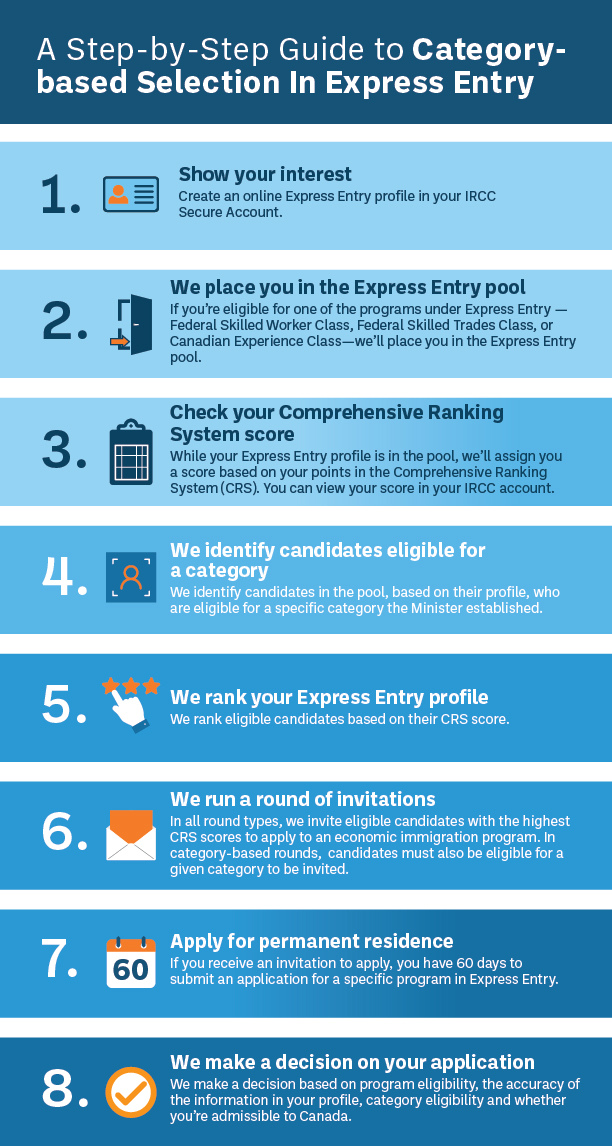
A high salary or generous bonus will not make up for an ineligible classification; your daily duties must map directly to an eligible NOC code. For candidates on technical or managerial paths, reviewing verified profiles like software engineer positions gives a practical view of how real duties, NOC codes, and federal wage thresholds fit together under these rules.
2. Up to 100 CRS Points Return to the Table Without ESDC Bottlenecks
Ottawa spent 2024 and 2025 dismantling traditional paths to arranged employment points, pushed by political pressure over housing and population growth.
First came the low-wage LMIA freeze, which blocked employers in census metropolitan areas with unemployment rates above 6 percent from hiring temporary foreign workers for entry-level positions. Soon after, IRCC eliminated points for LMIA-backed job offers in several general categories. That step was meant to wipe out a predatory black market where brokers sold fraudulent LMIA approvals to desperate candidates for tens of thousands of dollars.
Those crackdowns curbed some abuse, but they left heavy collateral damage behind. Legitimate Canadian employers hunting for specialized talent found themselves locked out. A clean-tech company in Calgary trying to hire a specialized power systems engineer had to wait months for an ESDC processing officer to review routine advertising proofs. At the same time, highly qualified workers already in Canada on valid open work permits sat stranded in the pool with scores near 490, watching cutoff marks stay above 520 draw after draw.
The November 3 update fixes that administrative bottleneck. By removing ESDC from the high-wage equation, IRCC lets employers extend qualifying offers to skilled workers using standard corporate employment agreements.
Bringing 50 to 100 points back into play resets the math inside the Express Entry pool. A candidate with a master’s degree, strong language proficiency, and three years of foreign experience often lands between 470 and 485 CRS points. Under previous rules, that candidate stayed stuck unless they secured a provincial nomination or matched a category-based draw. Adding 70 to 100 points for a qualifying job offer pushes their score past 550, which guarantees an Invitation to Apply (ITA) in the next round.
This route also creates major opportunities for candidates targeting the Express Entry skilled trades draw. Many licensed trades, including specialized electricians, pipefitters, and heavy equipment mechanics, sit safely above local high-wage median benchmarks. Employers in commercial construction and industrial maintenance, who routinely avoided the LMIA process because of the administrative burden, can now provide qualifying offers using a compliant employment letter.
For skilled job seekers, this changes your conversations with prospective employers. You do not need to ask an HR department to file paperwork with ESDC, run public recruitment ads, or disclose proprietary company data. A genuine, full-time, non-seasonal offer of indeterminate employment in an occupation matching your background gives you the points.
Independent immigration consultants and advisors have already started walking candidates through what these point allocations look like in practice.
As shown in the video above, securing these points no longer requires dealing with ESDC bureaucracy, but you still need to ensure your employer documents your hiring process properly.
1. How IRCC Assesses “Offer Genuineness” (And the Exact 00000 Profile Workaround)
We put this point first because this is where files will stand or fall.
IRCC is not easing up on checks just because ESDC stepped aside. In the past, an ESDC officer reviewed corporate legitimacy, bank accounts, and domestic recruitment before signing off on an LMIA. Now that this gatekeeper is gone, that entire vetting process falls on the IRCC visa officer handling your permanent residence file.
Under Section 200 and Section 82 of the Immigration and Refugee Protection Regulations, officers have wide latitude to decide if a position is real. If an officer suspects an employer cooked up a job simply to inflate your Express Entry score, you can expect a procedural fairness letter or an outright refusal for misrepresentation, which comes with a mandatory five-year ban from entering Canada.
Corporate immigration teams have already told their corporate clients to expect relentless scrutiny from IRCC officers:
Employers can expect officers to request evidence demonstrating that the role is genuinely needed, the business is actively operating, and recruitment and compensation practices comply with applicable employment standards.
Proving an offer is genuine without an LMIA comes down to four core requirements:
First, your employer has to show that the business is actively operating in Canada. Officers look at provincial registrations, Canada Revenue Agency (CRA) payroll records via PD7A forms, commercial lease agreements, and corporate tax returns on T2 notices of assessment. A shell entity or a brand new incorporation that is not yet operating cannot back a valid job offer.
Second, the company must show it can comfortably pay the wage in the contract. If a small business brings in $80,000 in net annual revenue and promises to pay you $95,000, the officer will spot the gap immediately and reject the offer as non-genuine.
Third, your daily routine has to match your selected NOC code. Suppose your job offer classifies you as an engineering manager (NOC 20010, Tier 1), but you spend your shifts doing basic CAD drawings and closing repair tickets. An officer will reclassify your position to a technician level. If that downgraded code misses the 1.3 wage multiplier, IRCC pulls the 100 points, your CRS score drops beneath the draw threshold, and your application gets refused.
Fourth, the role must provide continuous, full-time, non-seasonal employment lasting for at least one year once you become a permanent resident.
Aside from the paperwork, you also have to deal with a clumsy system quirk inside the IRCC portal starting November 3. Federal IT updates lag behind policy changes, so the Express Entry questionnaire will not have dedicated checkboxes for non-LMIA offers right out of the gate.
Until the online forms catch up, IRCC has provided specific data-entry instructions for claiming these points:
Under the Work History section of your Express Entry profile, answer “Yes” to “Was a positive LMIA issued for the job offer in Canada?”.
When the portal asks for the LMIA Number, enter: 00000
For the LMIA Issuance Date, enter: 2026-01-01
For the LMIA Expiry Date, enter: 2029-01-01
Typing in these exact dummy values is currently the only way the system will acknowledge your arranged employment and grant your points under the Labour Market Integration factor. If you skip this workaround or enter anything else, the system will discard your job offer, leaving your profile short of the score you earned.
Action Plan: Preparing Your Strategy Before November 3
Waiting around for November 3 before you organize your paperwork will leave you behind. Employers, candidates, and immigration consultants will all scramble on the same morning. If you want an Invitation to Apply in the first rounds after draws resume, your files need to be ready to submit the day the system reopens.
Step 1: Execute a Forensic NOC Code Audit
Your company job title means very little to immigration officers. Look up your target code on Job Bank within the National Occupational Classification database, then read the lead statement, the main duties, and the employment requirements.
An IRCC officer checks whether your day-to-day responsibilities cover the substantial majority of the duties in that federal description, especially the core actions. After confirming the right NOC code, compare its median wage against the schedules published by IRCC. You need to know which bracket applies to you: Tier 1 (100 points), Tier 2 (70 points), or Tier 3 (50 points). If the median wage for your NOC code is under 1.3 times the Canadian average, you cannot claim arranged employment points without an LMIA, even if your own paycheque is well above that line.
Step 2: Formalize Your Employment Documentation
Candidates already working in Canada on temporary work permits should talk to human resources or their hiring manager right away. You must obtain a signed job offer letter printed on official company letterhead that includes specific phrasing required by the department.
That letter has to state that your employment is full-time (at least 30 hours per week), non-seasonal, and continuous for at least one year following the date your permanent resident visa is issued. It also needs to list your job title, target NOC code, full duties, regular working hours, physical work location, and exact hourly or annual compensation. The offered wage must meet or beat the regional prevailing wage for your NOC code. You can check that number through provincial sources such as Employment Ontario.
Step 3: Polish Your Market Positioning
Job seekers without an existing Canadian offer get a genuine advantage once the LMIA requirement drops. Canadian hiring managers often toss aside resumes from international applicants because they assume hiring from abroad requires a slow, expensive LMIA filing.
Address that assumption directly in your cover letter and outreach messages. Explain that your role fits IRCC’s high-wage exemption for arranged employment points. The employer can back your permanent residence application without paying ESDC fees, keeping recruitment logs, or waiting months for government processing.
Your materials also need to read like those of a local candidate. Arranging a resume assessment helps you spot foreign phrasing that confuses Canadian hiring teams and replace it with language they expect. Take the time to optimize your LinkedIn profile for Canadian recruiters as well, making sure your NOC profile and your availability to work in Canada are clear on the page.
Step 4: Update Your Express Entry Portal Data
If you have a qualifying offer, prepare your information so you can update your profile as soon as the portal opens on November 3. Have your employer’s legal business name, physical work address, Canada Revenue Agency business number, and your official start date written down and ready.
Follow the step-by-step instructions from IRCC inside your account. Head to the job offer section, check the box indicating a positive LMIA was issued, and type in the placeholder values: LMIA Number: 00000; Issuance Date: 2026-01-01; Expiry Date: 2029-01-01. Review every date and NOC code before saving. A typo in your NOC code or start date can trigger an automated rejection when the system recalculates the pool.
Opening up arranged employment points without an LMIA creates a practical route to permanent residency for high-wage professionals. When your occupation meets the threshold and your employer documents the job properly, those points can bump your score high enough to pull you out of the pool and into an invitation round before the year is out.
Key takeaways
6
- Express Entry invitation rounds pause for up to two weeks starting November 3, 2026, while backend systems recalculate Comprehensive Ranking System profiles.
- The Labour Market Integration factor prevents candidates from combining points for Canadian work experience with points for a qualifying job offer.
- High-wage occupation eligibility depends on whether the national median wage for a National Occupational Classification code reaches at least 1.3 times the Canadian average.
- Qualifying high-wage job offers award 50, 70, or 100 Comprehensive Ranking System points without requiring an application to Employment and Social Development Canada.
- Immigration officers evaluate employer operational legitimacy, ability to pay, and job duties directly to determine whether a non-LMIA job offer is genuine.
- Express Entry candidates claiming non-LMIA points must enter 00000 as the Labour Market Impact Assessment number until online forms receive permanent updates.
Frequently asked questions
5
How does an occupation qualify as high wage under the new Express Entry rules?
High-wage status requires the national median wage of an occupation's National Occupational Classification code to equal or exceed 1.3 times the Canadian average median hourly wage. An applicant's personal salary or contract rate does not determine eligibility. Occupations with medians between 1.3 and under 1.5 times the national median receive 50 points, those between 1.5 and under 2.0 times receive 70 points, and occupations at 2.0 times or higher receive 100 points.
Can candidates combine points for Canadian work experience and a job offer?
Candidates cannot combine points for Canadian work experience with points for a qualifying job offer under the Labour Market Integration factor. The scoring system assesses Canadian work experience under Track A and job offers under Track B, granting points only for whichever track yields the higher value. Total points under this factor are capped at 150 points for single applicants and 140 points for applicants with a spouse or common-law partner.
How do candidates claim non-LMIA job offer points in the Express Entry portal?
Candidates claim these points by answering yes to the positive Labour Market Impact Assessment question and entering specific temporary placeholder values. The required entry uses 00000 for the document number, 2026-01-01 for the issuance date, and 2029-01-01 for the expiry date. Skipping these placeholder inputs or leaving the arranged employment section unedited causes the automated system to omit job offer points during profile recalculations.
How do immigration officers verify that a job offer is genuine without an LMIA?
Immigration officers verify offer genuineness by reviewing corporate operating documents, business financial ability, and daily job duties. Officers examine Canada Revenue Agency payroll records, provincial business registrations, lease agreements, and corporate tax returns to ensure the business is active. In addition, the employer must show sufficient revenue to pay the stated salary, and the employee daily responsibilities must correspond to the designated National Occupational Classification code rather than lower-skilled tasks.
When do the new Express Entry high-wage job offer rules take effect?
The new Express Entry job offer rules take effect on November 3, 2026. Immigration, Refugees and Citizenship Canada will pause invitation rounds for up to two weeks on that date to recalculate candidate profiles across the database. Candidates with qualifying job offers must update their profiles manually during this period, whereas points for eligible Canadian work experience update automatically through backend algorithms.
Upcoming career fairs
Career fairs in Ottawa
12th edition of the traditional Intercultural Entrepreneurs’ Fair
- Nearby · Gatineau
- Free
Rendez-vous des carrières juridiques de l'UQO 2026
- Nearby · Gatineau
- In person
- Free
Listings are gathered each month from public event pages. Confirm the details with the organizer before you go.
More From the Blog
Workforce Retention and Retraining Program: New Canadian Worker Aid
Learn how the new Workforce Retention and Retraining Program protects Canadian jobs, tops up wages, and funds critical skill building...
Read the articleBank of Canada Business Outlook Survey: Top 5 Hiring Trends Canadian Job Seekers Must Know
Discover key insights from the Bank of Canada Business Outlook Survey. Learn the top 5 hiring trends and salary shifts to land your next...
Read the articleParks Canada Workforce Adjustments: Conservation Jobs in Canada Outlook
Parks Canada's workforce adjustments affect 2,900 staff. Here is the outlook for conservation jobs in Canada and how to transition your...
Read the articleReady to Launch Your Career Marketing Campaign?
Book a strategy call and see how Nainly can transform your job search.
Schedule a CallFree consultation. No commitment.