On this page
- The Shockwave Across Canadian Mills and Value Chains
- Understanding Your Legal Rights: Layoffs, Statutory Notice, and Severance
- What Not to Do When Tariff Fallout Hits Your Plant
- The Pivot: Industrial Sectors Actively Hiring Assembly and Production Workers
- Heavy Transportation, Rail, and Specialized Vehicle Assembly
- Commercial Food and Beverage Processing
- Building Envelopes, Prefabricated Modular Structures, and Clean Construction
- Advanced Electrical, Power Infrastructure, and Transformer Equipment
- How to Translate Shop-Floor Competencies into Modern Industrial Job Postings
- Retraining Funds, Wage Subsidies, and Agency Placements
- Practical Steps to Protect Your Income Starting Today
- In brief
- Key takeaways
- Frequently asked questions
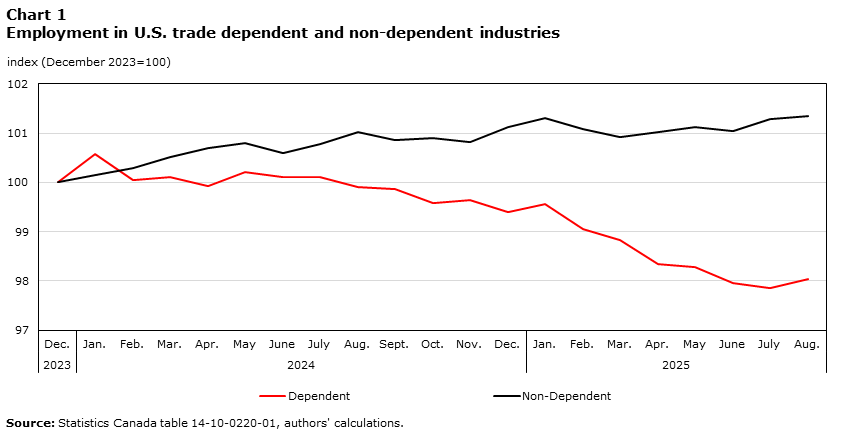
On October 25, 2026, Canadian hardwood and flooring producers gave their workforce grim news: unexpected 50 percent U.S. tariffs threatened to wipe out a massive share of their export market overnight, raising the prospect of sudden plant shutdowns and layoffs. Washington had modified Section 338 duties on October 23, adding products like engineered wood flooring, thin medium-density fibreboard, hardboard moldings, and vinyl flooring to the punitive 50 percent tariff list, effective October 30. That decision hit hard for crews running milling lines in Quebec, finishing plants in Ontario, and value-added timber operations in British Columbia. When an export-reliant mill loses the primary market buying its finished product, production schedules can disappear in a matter of days.
Watching cross-border political fights threaten your livelihood is maddening when you earn your living on a plant floor or run an assembly line. You had no part in the trade dispute, yet you are the one coping with cancelled shifts and temporary layoff notices. While the risks facing Canadian manufacturing jobs are genuine, other industrial subsectors are short on dependable operators, assemblers, and technicians. Moving forward successfully comes down to two things: understanding your statutory rights so an employer does not shortchange your severance, and translating your hands-on competencies so recruiters in non-tariffed industries see you as an immediate asset.
The Shockwave Across Canadian Mills and Value Chains
Secondary wood manufacturing feeds straight into local economies, which is why a border penalty hits individual plant shifts so quickly. A flooring mill depends on a whole domestic supply network: loggers, primary sawmills, kiln-drying setups, adhesive suppliers, and regional freight haulers. The moment a 50 percent tariff slaps finished flooring at the border, wholesale buyers in the United States cancel purchase orders. They simply cannot absorb a 50 percent surcharge on landed wood.
Executive comments over the weekend showed how narrow the options are. Most manufacturing subsectors operate on thin operating margins, usually between 4 and 9 percent once you account for raw timber, machinery leases, power, and plant wages. When a finished plank faces a 50 percent border tax, passing that price hike along to American builders will not work, because those customers will simply buy domestic stock or order European engineered lines. Absorbing the hit internally is impossible, since mills would lose money on every square foot shipped. That leaves plant managers with one practical choice: throttle production lines down to whatever volume Canadian domestic buyers and non-U.S. export channels can absorb.
The damage lands hardest on specific industrial communities. Quebec has dozens of specialized flooring and architectural millwork operations scattered across Chaudière-Appalaches, the Centre-du-Québec region, and the Eastern Townships. In many of these towns, the secondary wood facility is one of two or three main industrial employers. When a plant cuts its schedule from three shifts down to one, the whole municipality feels the drag within weeks.
Ontario sits in a similar bind across its southwestern manufacturing corridors and central wood products hubs, running from Peterborough and Belleville through to Grey County. Facilities there process domestic timber into tongue-and-groove hardwood, acoustic paneling, and commercial floor tiles. Out in British Columbia, this trade dispute piles onto an already painful stretch for forestry workers, who have spent years dealing with unpredictable softwood duties and fiber supply crunches.
As warehouse aisles fill with finished inventory that costs too much to cross the border, companies scale back in predictable stages. First comes a freeze on discretionary budgets, an end to overtime, and offers of voluntary unpaid leave. If trade negotiations fail to carve out exemptions, temporary layoffs follow fast. When warehouse stock stays stalled for more than a few months, those temporary layoffs turn into permanent terminations.
Industry associations across the country are pushing Ottawa for trade relief and defensive import measures. Dennis Darby, President and CEO of Canadian Manufacturers & Exporters, pointed to the widespread pressure on domestic factory footprints during an interview with CTV:
While executives lobby federal ministers for emergency liquidity and retaliatory surtaxes, shop-floor workers cannot wait on Ottawa or Washington. You still have rent, utility bills, and groceries to cover, which makes knowing your baseline legal protections essential.
Understanding Your Legal Rights: Layoffs, Statutory Notice, and Severance
When plant management calls an emergency meeting to announce line slowdowns, they often lean on softening corporate jargon like “temporary suspension,” “standdown period,” or “temporary layoff.” Your legal protections depend on statutory employment standards rather than the company’s internal vocabulary. In Canada, employment regulations are provincial for almost all factory workers, with federal rules limited to specific sectors like telecommunications, interprovincial rail, or aviation.
Every province sets hard calendar boundaries on how long an employer can leave you on a temporary layoff before the legal system treats your job as permanently terminated. That distinction matters because a termination immediately triggers mandatory statutory notice or pay in lieu of notice, alongside any severance pay you have earned.
In Ontario, under the Employment Standards Act (ESA), a temporary layoff can generally run up to 13 weeks within any 20 consecutive weeks. An employer can only stretch that layoff up to 35 weeks within a 52-week period if they satisfy specific legal conditions, such as continuing your group health insurance benefits, paying into your retirement plan, or providing supplemental unemployment benefits. If the employer halts your benefits or lets the 13-week limit expire without recalling you to work, your job is officially terminated under Ontario law.
Ontario workers should also understand the division between statutory termination pay and statutory severance pay. Termination pay covers almost any worker with at least three months of continuous service, calculated at roughly one week of regular wages per year of service up to an eight-week cap. Statutory severance pay is an entirely separate entitlement under Section 64 of Ontario’s ESA. It applies if your employer maintains a global payroll of at least $2.5 million, or if the company cuts 50 or more employees within a six-month period because a plant permanently closes down. If you have been with that business for five or more continuous years and meet those criteria, statutory severance adds one week of regular pay per completed year of service (plus prorated amounts for partial years), up to a maximum of 26 weeks.
Quebec operates under its own legal system through the Commission des normes, de l’équité, de la santé et de la sécurité du travail (CNESST) and the Act respecting labour standards. Under Quebec rules, an employer who places an employee on layoff for six continuous months or more has terminated that worker under the law. Management must supply written notice of termination or equivalent pay based on your length of uninterrupted service, running from one week for under one year of service up to eight weeks for ten or more years. Furthermore, if a Quebec manufacturer carries out a collective dismissal by laying off or terminating 10 or more workers at an establishment across two consecutive months, they must submit advance statutory notice to the Ministry of Employment and Social Solidarity. That collective notice timeline ranges between eight and sixteen weeks, depending on the total workforce affected.
In British Columbia, the Employment Standards Act restricts a temporary layoff to 13 weeks within a 20-week window. Once a layoff passes that 13-week line, the law considers the job terminated retroactively from the first day the layoff began. BC mandates written compensation for length of service, stepping up to eight weeks of wages after eight consecutive years. For group terminations involving 50 or more employees within a two-month period, BC employers must give between 8 and 16 weeks of advance written notice to both the Minister of Post-Secondary Education and Future Skills and every affected worker.
In Alberta, under the Employment Standards Code, a temporary layoff can last up to 90 days total inside a 120-day window. If management fails to issue a formal recall to work before the 90th day ends, your layoff turns into a permanent termination, activating your statutory termination notice rights.
Beyond these statutory minimums sits common law reasonable notice. Unless you work under a union collective agreement that controls layoff and recall seniority, or you signed an employment contract containing an ironclad, enforceable termination clause restricting you to provincial minimums, Canadian courts frequently award substantially higher compensation. Judges weigh your age, years of service, the character of your employment, and the availability of similar positions across your regional market when assessing common law notice.
If management hands you a termination letter accompanied by a severance offer, they will often set a tight deadline to sign a full and final release. Do not sign that paperwork on the spot. Companies often present statutory minimum payouts as generous separation packages, hoping workers will give up their rights before getting advice. You have the legal right to take that document home, speak with an employment lawyer or an independent legal clinic, and determine whether the monetary offer reflects your real tenure and common law entitlements.
Finally, protect your paperwork. Your employer must file your Record of Employment (ROE) with Service Canada within five calendar days after the end of the pay period during which your earnings were interrupted. Make sure the box for separation reason reads Code A (“Work Shortage / Layoff”). A clean Code A ROE lets you submit your Employment Insurance (EI) regular benefits claim immediately without delays. According to Statistics Canada, timely benefit filings prevent severe household cash crunches during unexpected industrial downturns.
What Not to Do When Tariff Fallout Hits Your Plant
When a plant restructures, your immediate instincts can push you toward moves that feel productive while quietly draining your savings. A few common missteps cost workers months of runway.
First, do not wait for government subsidies to rescue your specific production line. Whenever a major industrial shock hits the news, federal and provincial politicians hold press conferences to announce emergency funds, export diversification grants, or trade dispute task forces. Actually negotiating, setting up, and paying out that money takes months. By the time a mid-sized mill applies for an industrial support loan or waits for trade adjudicators to review bilateral tariff schedules, several quarters have passed. Counting on political relief to protect your shift is an unnecessary gamble with your household finances.
Second, do not send out dozens of identical, generic resumes to employers across your region. In our experience, workers wrapping up a long run at a single facility often format their daily tasks like an internal checklist: “Ran Machine 4B,” “Monitored glue line pressures,” or “Adhered to shift quota on cut line 2.” A hiring manager at a transit equipment fabricator or a medical device packager has no idea what “Machine 4B” means. They glance at your page for six seconds, assume your skills only apply to milling wood planks, and move on.
Third, avoid treating temporary employment agencies as an all-or-nothing proposition. Some tradespeople dismiss staffing firms outright out of pride, while others drift through precarious temp contracts for years without asking how placements convert into permanent positions. As discussed in our guide on staffing agency vs direct hire, an agency can provide immediate income while your regular sector stalls, provided you verify whether an assignment includes a genuine temp-to-perm conversion track.
Fourth, resist the urge to cash out registered retirement savings or load up on costly consumer debt before exploring transitional support. Between statutory termination pay, EI benefits, provincial training allowances, and second-career funding, laid-off Canadian manufacturing workers usually have structured financial buffers available. Maxing out high-interest credit cards or pulling from an RRSP while ignoring government retraining aid is an expensive mistake.
The Pivot: Industrial Sectors Actively Hiring Assembly and Production Workers
A single tariff order can wipe out shifts at one plant while the shop down the road cannot find enough people to run its lines. Secondary wood manufacturing might be taking the brunt of cross-border trade friction right now, but plenty of Canadian facilities face steady shortages for dependable machine operators, material handlers, and assemblers. Your best move is targeting plants whose end products stay right here in Canada or ship to export markets with clean trade relations.
Heavy Transportation, Rail, and Specialized Vehicle Assembly
Consumer automotive assembly gets jerked around by border politics and supply chain bottlenecks, but commercial transit equipment, specialized trailers, municipal service bodies, and heavy rail keep running. Transit authorities and rail networks across Canada have multi-year replacement contracts on the books, backed by domestic manufacturing requirements.
Plants building passenger rail coaches, locomotive parts, farm machinery, and custom commercial utility trucks need people who understand structural steel, mechanical fasteners, pneumatic tools, and shop blueprints. If you know how to operate heavy shop machinery safely, align parts to tight tolerances, and work with pneumatic clamping systems, you can step onto a transit equipment floor with minimal onboarding.
Material handling inside these massive buildings never stops. Certified drivers who can safely transport structural members, steel framing, and heavy crated subassemblies are always in demand. If your tickets are current, looking for work as a forklift operator in heavy industrial yards gives you a direct path into plants building capital goods that sit outside US tariff disputes.
Commercial Food and Beverage Processing
Data from the Government of Canada Job Bank shows that food and beverage processing employs more manufacturing workers than any other industrial sector in the country. People buy groceries regardless of what happens to the economy or export rules, which shields these operations from the trade crossfire that hits luxury goods and building finishes.
Modern food processing facilities rely on high-speed automated packaging machines, washdown conveyors, computer-monitored bottling lines, and strict sanitary standards. If you spent years running production machinery in a timber mill, your core mechanical habits carry right over: tracking belts, clearing jams, aligning sensors, and following lockout-tagout procedures. Food plants place high value on line speed and safety discipline. Moving into a commercial bakery, dairy packaging floor, dry-goods line, or beverage canning plant gives you steady, year-round shifts.
Building Envelopes, Prefabricated Modular Structures, and Clean Construction
Section 338 duties might choke Canadian flooring exports to the United States, but our domestic housing shortage has driven serious demand for factory-built modular homes, structural wall panels, and precast concrete.
Provincial and federal infrastructure programs continue to fund factory-built housing to speed up domestic construction schedules. These facilities operate as manufacturing plants rather than outdoor construction sites. Crews take dimensional lumber, steel studs, subflooring, and insulation, then build complete residential pods inside a climate-controlled shop. If you have experience with industrial woodworking, structural framing, pneumatic nail guns, edge-banders, and precise measurements, you can shift from a millwork or flooring plant into modular construction without having to learn your trade from scratch.
Advanced Electrical, Power Infrastructure, and Transformer Equipment
Provincial power grid upgrades and renewable energy connections have left electrical equipment makers sitting on massive order backlogs. Plants that build distribution transformers, industrial control cabinets, switchgear assemblies, and heavy cable trays are expanding their shifts across Ontario, Alberta, and Quebec.
Assembly work here involves routing wire harnesses, mounting mechanical components, checking work against schematics, and precise mechanical assembly. If you have good attention to detail, strong electrical safety habits, and solid dimensional accuracy, you will find steady union and non-union jobs in these facilities.
The September 2026 Labour Force Survey showed export-exposed manufacturing shed 12,700 positions across Canada in early autumn, yet specialized equipment builders, transportation support, and industrial repair held their ground. Focusing your job search on plants tied to domestic infrastructure protects your income when cross-border trade turns volatile.
How to Translate Shop-Floor Competencies into Modern Industrial Job Postings
Recruiters outside the forestry sector do not care which species of birch or oak your old mill processed. They want to know whether you show up on time, follow lock-out/tag-out rules, grasp continuous improvement, and keep heavy equipment running without burning out bearings.
Moving into another manufacturing sector requires stripping plant-specific jargon out of your resume and replacing it with standard industrial terminology.
Take a typical bullet point from a wood mill resume: “Ran the rip-saw and tenoner machine on the engineered oak line, hitting daily board-foot targets and stacking pallets.”
To a plant manager at an aerospace supplier or an electrical switchgear plant, that wording tells them you only know how to cut lumber.
Here is that exact same job translated into modern industrial competency terms: “Operated high-speed multi-axis automated cutting machinery, maintaining strict dimensional tolerances within ±0.5 mm across high-volume production runs. Conducted routine machine setups, tool calibration, and sensor inspections, contributing to a 98% on-spec shift production rate. Complied with all provincial plant safety standards and plant lock-out/tag-out (LOTO) protocols.”
The rewritten version drops the lumber vocabulary and focuses on tolerances, calibration, machine upkeep, scrap reduction, and safety compliance. Those operational competencies transfer directly into aerospace component finishing, plastics blow-molding, automotive parts stamping, and modular wall manufacturing.
To get past automated applicant filters, build your resume around five operational areas that plant managers look for:
-
Machine Operation and Basic Preventative Maintenance (PM): Detail your work with programmable logic controllers (PLCs), human-machine interfaces (HMIs), tooling setups, blade and die replacements, hydraulic fluid checks, and lubrication schedules. Employers look for operators who can troubleshoot a feed problem before it turns into three hours of unplanned downtime.
-
Quality Control and Metrology: Name the precise tools you used to verify parts. Mention calipers, micrometers, laser gauges, dial indicators, and visual pass/fail standards. If you logged inspection records or pulled pieces off the line for statistical process control (SPC) checks, put that in plain language.
-
Lean Manufacturing and Continuous Improvement: If your past employer used 5S workplace organization, Kaizen events, Six Sigma quality controls, or cellular assembly lines, include those terms. Even practical floor adjustments, like reorganizing a staging area to cut worker transit time or trimming 15 minutes off a tooling changeover, show that you understand plant efficiency.
-
Safety Governance and Compliance: Plant managers want operators who respect safety standards. Listing credentials such as WHMIS (Workplace Hazardous Materials Information System), standard first aid, Joint Health and Safety Committee (JHSC) participation, fall protection, or overhead crane operation signals that you work safely and protect the team.
-
Production Scheduling and Digital Tracking: Mention whether you scanned work orders with barcode guns, updated inventory counts through enterprise resource planning (ERP) software like SAP or JobBOSS, or tracked shift production targets on digital boards. Show that you are comfortable with shop-floor software.
The federal government maps these transferable abilities through its Skills for Success framework. As Employment and Social Development Canada outlines in its official guidance, core strengths like communication, problem solving, and adaptability anchor any career transition between industrial sectors:
When you optimize your LinkedIn profile for Canadian recruiters using these standard industrial terms, you start showing up in searches run by agency recruiters and plant supervisors looking for dependable operators. If you are unsure how your shop-floor history reads to an outsider, an objective resume assessment can flag positioning gaps before you spend weeks sending out applications that go unanswered.
Retraining Funds, Wage Subsidies, and Agency Placements
Leaving a battered manufacturing sector does not mean starting over at minimum wage. Both levels of government run substantial training funds aimed directly at trade-displaced workers looking to move into related, hiring industries.
If you are facing a permanent layoff or an extended plant standdown, look into provincial support right away.
Ontario workers can apply through Employment Ontario. Their Better Jobs Ontario program (formerly the Second Career program) offers up to $28,000 for eligible applicants. That money covers tuition, books, transportation, and basic living allowances while you train for fields short on talent, such as industrial trades, advanced manufacturing, and green technology.
Quebec offers similar transition help through Services Québec. Programs like the Programme d’aide à la relance par l’augmentation de la formation (PARAF) and targeted training vouchers help workers learn CNC programming, mechatronics, or automated systems without losing their income during the transition.
Across Western Canada, provincial training networks handle these shifts. British Columbia coordinates retraining through WorkBC, while Alberta workers can research regional job profiles and skills investment grants through Alberta ALIS. These services connect directly to programs that help plant workers move out of heavy resource processing and into mechanical maintenance, renewable energy, and technical warehousing.
Workers caught in widespread trade disruption can also turn to initiatives like the workforce retention and retraining program. These programs link government dollars to employer apprenticeships. Many manufacturers looking for machine operators and assembly mechanics team up with local colleges to offer subsidized micro-credentials lasting anywhere from four to twelve weeks.
Keep wage subsidies in mind, too. The Canada-Ontario Job Grant (COJG) and comparable provincial programs elsewhere will cover up to 80 percent of training costs when an employer brings on a displaced worker and pays for accredited upskilling. Bringing up these grants in an interview can be surprisingly persuasive, since taking on a new hire looks much better to an employer when the province picks up the training tab.
Practical Steps to Protect Your Income Starting Today
When trade disputes threaten production shifts, waiting around to see what happens leaves you at the mercy of decisions made in corporate boardrooms. Taking a few direct, practical steps protects your paycheque and gets your next move underway.
- Gather and back up your employment documentation: Ask for an updated paper copy or digital export of your training records, internal equipment sign-offs, hours logs, and recent paystubs. If the plant closes down suddenly, chasing former human resources staff to confirm your tenure or ticket verifications is an administrative nightmare you do not want to deal with from the outside.
- Confirm the status of your Record of Employment: Make sure your employer sends your electronic ROE straight to Service Canada the moment a layoff happens. Confirm that Code A is checked, and submit your Employment Insurance application right away without waiting for paper forms to show up in the mail.
- Review your termination and severance offer against statutory limits: Calculate your legal minimum notice and severance pay under your province’s employment standards. Never sign a release or accept an initial severance package on the spot. Take at least 48 hours to evaluate what you are owed under common law alongside an employment lawyer.
- Revise your resume to highlight universal machine competencies: Cut out mill-specific slang, proprietary model numbers, and timber-only wording. Frame your work around skills any plant manager values: machine maintenance, PLC operation, dimensional quality control, plant safety compliance, and team problem-solving.
- Map out alternative industrial facilities within your commuting radius: Pick five non-wood manufacturing facilities close to home, such as food processing plants, transit vehicle builders, plastics manufacturers, or modular construction facilities. Reach out directly to their human resources departments or plant managers to explain how your hands-on assembly experience translates to their floor.
Cross-border trade disputes will stay unpredictable for months. Negotiators will revise tariff schedules and corporate boards will debate capital spending, but your bills cannot wait for trade policy to settle. Knowing your statutory rights under provincial employment standards, protecting your full severance entitlements, and pointing your shop-floor background toward Canadian plants that are hiring puts you back in charge of where you work next.
Key takeaways
6
- United States Section 338 duties imposed 50 percent tariffs on Canadian flooring producers, putting export lines and mill shifts at risk.
- Provincial employment standards set strict time limits on temporary layoffs before employers must provide statutory termination notice or severance pay.
- Laid-off factory workers should review severance packages against common law entitlements and obtain an accurate Record of Employment for Employment Insurance.
- Domestic sectors including transit vehicle manufacturing, food processing, modular housing, and power equipment fabrication continue hiring industrial assemblers and machine operators.
- Job applicants improve hiring outcomes by converting mill-specific jargon into standard industrial terms covering machine maintenance, quality control, and plant safety.
- Displaced manufacturing workers can fund career transitions using provincial retraining grants such as Better Jobs Ontario or employer-backed wage subsidies.
Frequently asked questions
5
How long can a Canadian employer keep a worker on temporary layoff before it becomes a termination?
Provincial employment standards laws limit the duration of temporary layoffs before treating employment as terminated. In Ontario, temporary layoffs generally reach a termination threshold after 13 weeks within 20 consecutive weeks, extendable up to 35 weeks within 52 weeks under specific benefit conditions. Quebec classifies layoffs of six continuous months as terminations. British Columbia caps layoffs at 13 weeks within 20 weeks, while Alberta permits layoffs up to 90 days in a 120-day window.
What severance pay is an Ontario manufacturing worker entitled to receive after a layoff?
Ontario factory workers can qualify for both statutory termination pay and statutory severance pay under the Employment Standards Act. Termination pay covers employees with three months of service and provides up to eight weeks of wages. Severance pay applies if an employer has a global payroll of at least $2.5 million or lays off 50 or more workers during a plant closure. Qualified staff with five continuous years of service receive up to 26 weeks of regular pay.
Can laid-off wood mill workers qualify for statutory group termination notice?
Canadian provincial laws mandate extended group notice periods when manufacturers terminate large groups of employees together. In Ontario and British Columbia, companies terminating 50 or more employees within a two-month timeframe must provide between 8 and 16 weeks of advance notice. In Quebec, group notice rules apply when employers dismiss 10 or more staff across two consecutive months. Employers failing to provide required working notice must pay equivalent compensation to workers.
Which Canadian manufacturing sectors are hiring workers displaced by trade tariffs?
Canadian industrial sectors tied to domestic contracts and infrastructure projects actively hire assemblers and machine operators. Transit equipment manufacturers, rail car builders, and municipal vehicle plants need operators with metalworking and blueprint reading abilities. Commercial food and beverage processors hire operators to run packaging and bottling machinery. Prefabricated modular home builders and electrical equipment manufacturers producing power switchgear and transformers also maintain hiring schedules unaffected by U.S. lumber tariffs.
How can manufacturing workers describe plant experience on a resume for other industries?
Manufacturing workers can replace machinery nicknames and timber terms with standard industrial competencies. Resumes should describe equipment operations in terms of tolerances, computer interfaces, tool calibrations, and preventative maintenance schedules. Workers can highlight quality control methods, such as calipers or statistical checks, alongside formal safety training like WHMIS or lockout-tagout procedures. Focusing on continuous improvement methods and digital tracking systems helps plant managers in other manufacturing sectors recognize relevant shop capabilities.
Upcoming career fairs
Career fairs in Ontario
St. Thomas Career Fair
- In person
PSW Job Fair (Milton)
- In person
Ajax Virtual Job Fair Oct 27, 2026
- Online
- Free
Listings are gathered each month from public event pages. Confirm the details with the organizer before you go.
More From the Blog
How to Get a Civil Engineering Job in Canada: A Step-by-Step Tutorial
Learn how to land a civil engineering job in Canada with our step-by-step tutorial covering PEO, APEGA, portfolio tips, and Canadian...
Read the articleAI Skills Gap in Canada: What Top Employers Screen for in 2026
Discover how the AI skills gap in Canada changes enterprise hiring in 2026, and learn practical steps to audit tasks, update resumes, and...
Read the articleExpress Entry Without LMIA: Top 5 Takeaways for Skilled Job Seekers
Discover how Express Entry without LMIA works starting November 2026, including high-wage occupation points, pool recalculations, and...
Read the articleReady to Launch Your Career Marketing Campaign?
Book a strategy call and see how Nainly can transform your job search.
Schedule a CallFree consultation. No commitment.